
You know the feeling: a closet stuffed to bursting, and still that familiar sigh of “I have nothing to wear.” The problem usually isn’t a lack of clothes. It’s that the good stuff is buried under things you never actually reach for.
A proper closet declutter fixes that, but only if you have a system for deciding what stays and what goes. Without clear rules, you just move piles around and give up. This guide gives you those rules so you can finish in an afternoon and keep it that way.
Why closets get out of control
Clothes accumulate for emotional reasons as much as practical ones. We hold onto the expensive mistake, the someday-it-will-fit jeans, and the gift we never liked out of guilt rather than use.
Recognizing that most clutter is emotional is the first step. Once you separate “clothes I wear” from “clothes I have feelings about,” the decisions get dramatically easier.

Start your closet declutter with everything out
The most effective way to declutter is also the most dramatic: take every single item out of the closet and pile it on the bed. An empty closet forces you to earn back every piece rather than passively keeping it.
Handling each item one at a time is the whole point. As you pick up each garment, you make one quick decision and move on, which prevents the endless “maybe” shuffle that stalls most cleanouts.
The decision framework: keep, donate, toss
Every item lands in one of three piles, and the goal is to decide fast. Overthinking is the enemy, so give yourself just a few seconds per piece.

Set up three clearly labeled boxes or bags before you start:
- Keep: you wear it, it fits, and you feel good in it.
- Donate or sell: it is in good shape but you don’t wear it.
- Toss or recycle: it is stained, torn, or worn beyond repair.
For clothes that are too damaged to donate, textiles can often be recycled rather than trashed. The EPA notes that a huge amount of clothing ends up in landfills, so recycling worn-out items is worth the small extra effort.
The questions that make decisions obvious
When you’re genuinely torn, a few honest questions cut through the indecision faster than any rule of thumb.
Ask yourself: Have I worn this in the last year? Would I buy it again today at full price? Does it fit the life I actually live, not the one I imagine? If the answer is no to all three, it goes.
The hanger trick for the undecided
For the “I might wear it” pile, use the reverse-hanger test. Hang everything backward, and after you wear and wash an item, return it facing the normal way. In a few months, anything still backward is a clear candidate to release.
Handling the emotional holdouts
Sentimental pieces and expensive mistakes deserve a gentler approach, because forcing yourself often leads to regret and re-cluttering. Give these items their own small “maybe” box.
Store the maybe box out of sight for 30 days. If you don’t go looking for anything in it, you’ve proven you don’t need it, and it can go without the guilt. For a single truly meaningful piece, keeping it is fine; the point is intention, not deprivation.
Put back only what earns its space
Once your keep pile is set, resist the urge to just stuff it back in. This is your chance to organize so the closet stays functional and everything is visible.
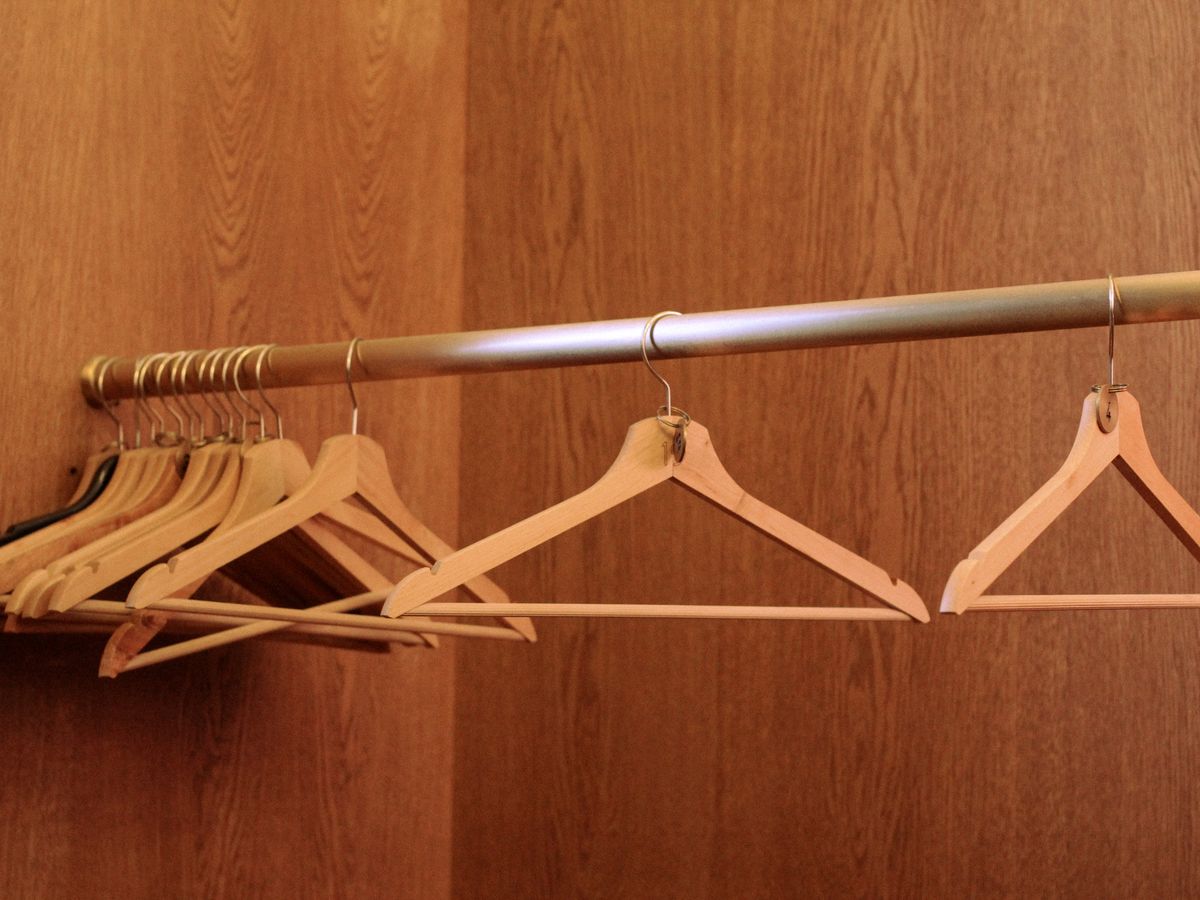
Group like with like, hang what wrinkles, and fold what stretches. If space is tight, matching hangers and a couple of shelf dividers make a surprising difference; our guide on how to organize a tiny closet without renovating has budget-friendly ideas.
Seasonal rotation also frees up daily space. Moving off-season pieces elsewhere keeps your working closet lean, and you can learn to store off-season clothes in a small apartment without cramming them back in.
Keep it decluttered for good
A closet declutter only sticks if you have a simple maintenance habit. The most reliable one is the one-in, one-out rule: every new item means an old one leaves.
It also helps to keep a donate bag in the closet at all times. The moment something stops earning its place, it goes straight in, and when the bag is full it goes out the door. Caring properly for the keepers helps too, since clothes that stay looking new are ones you actually want to wear, which is why habits like learning to keep black clothes from fading pay off long after the declutter is done.
How much should you actually keep?
People often ask for a magic number, but the right amount is however much fits comfortably in your space with room to see everything. If your rod is so packed that clothes wrinkle just hanging there, you have too much.
A useful benchmark is that you probably wear about 20 percent of your clothes 80 percent of the time. That does not mean you must cut to a fifth of your wardrobe, but it does reveal how much you are storing purely out of habit.
Focus less on hitting a target and more on the feeling of an open, breathable closet where every item is one you would genuinely choose. When you can see everything at a glance, you naturally wear more of what you own.
Mistakes that sabotage a closet declutter
A few predictable errors turn a productive afternoon into a bigger mess. The most common is decluttering without a plan for where the donate and toss piles go, so they linger for weeks and creep back in.
Another is trying to do the whole house in one day and burning out halfway through the bedroom. Closets are enough for one session. Finally, avoid shopping to “reward” yourself right after; that undoes the work before the donate bag even leaves your car.
Do not declutter someone else’s things
If you share a closet, only sort your own clothes. Tossing a partner or family member’s items, even the ones you think are hopeless, breeds resentment fast. Lead by example with your side and let them follow when ready.
What to do with the clothes you release
Getting items out of the house quickly is what makes a declutter permanent. Have a destination ready for each pile before you finish sorting.
Good options include local donation centers, clothing swaps with friends, consignment or resale apps for higher-value pieces, and textile recycling bins for anything too damaged to wear. Load the car the same day so the piles cannot quietly migrate back inside.
A realistic timeline for your first declutter
If the idea of an all-day project is what keeps you from starting, know that a focused closet declutter usually takes two to four hours, not a whole weekend. Setting a timer actually speeds up your decisions.
Plan for roughly 30 minutes to pull everything out, 60 to 90 minutes to sort into your three piles, and another 30 to 45 minutes to put the keepers back in an organized way. Build in a short break so decision fatigue does not push you toward keeping everything.
After the first big session, upkeep is tiny by comparison. A ten-minute pass every season is enough to catch new clutter before it builds, which means you never have to face the overwhelming full-closet project again.
Conclusion: a lighter closet, an easier morning
A good closet declutter isn’t about owning less for its own sake. It’s about making the clothes you love easy to find and easy to wear, so getting dressed stops being a daily battle.
Your next step: block out one afternoon this week, pull everything out, and run the keep-donate-toss system once. You’ll be amazed how much lighter your mornings feel afterward.

Felipe Amaral writes about laundry and clothing care for real life — small apartments, busy weeks and clothes you actually want to last. Based in Denver, Colorado, he’s made every laundry mistake in the book so you don’t have to.