
There’s a particular disappointment in taking a load off your indoor drying rack, holding a shirt to your face, and catching that flat, damp, slightly sour note instead of clean laundry. You did everything right, and it still smells like a basement. If you dry clothes indoors — because you rent, because it’s winter in Denver, or because you just don’t own a dryer — that musty smell can feel unavoidable.
It isn’t. Learning how to dry clothes indoors without the musty smell comes down to three things: getting more water out before drying, moving air across the fabric, and never letting clothes sit half-dry for too long. Once you understand why the smell happens, fixing it is genuinely easy — and most of it costs nothing.
Why indoor-dried clothes smell musty in the first place
That musty smell is not really about the clothes. It’s about bacteria and mold spores that start multiplying the moment fabric stays damp for too long. When laundry dries slowly in still, humid air, those microbes have hours to feed and release the sour, earthy odor we associate with a damp cellar.
Indoors, three conditions make this worse: low airflow, high humidity, and cool temperatures. A thick towel draped over a rack in a closed bedroom might stay wet for eight or ten hours, which is more than enough time for smell-causing bacteria to take hold. The fix is to shorten that drying window as much as possible.
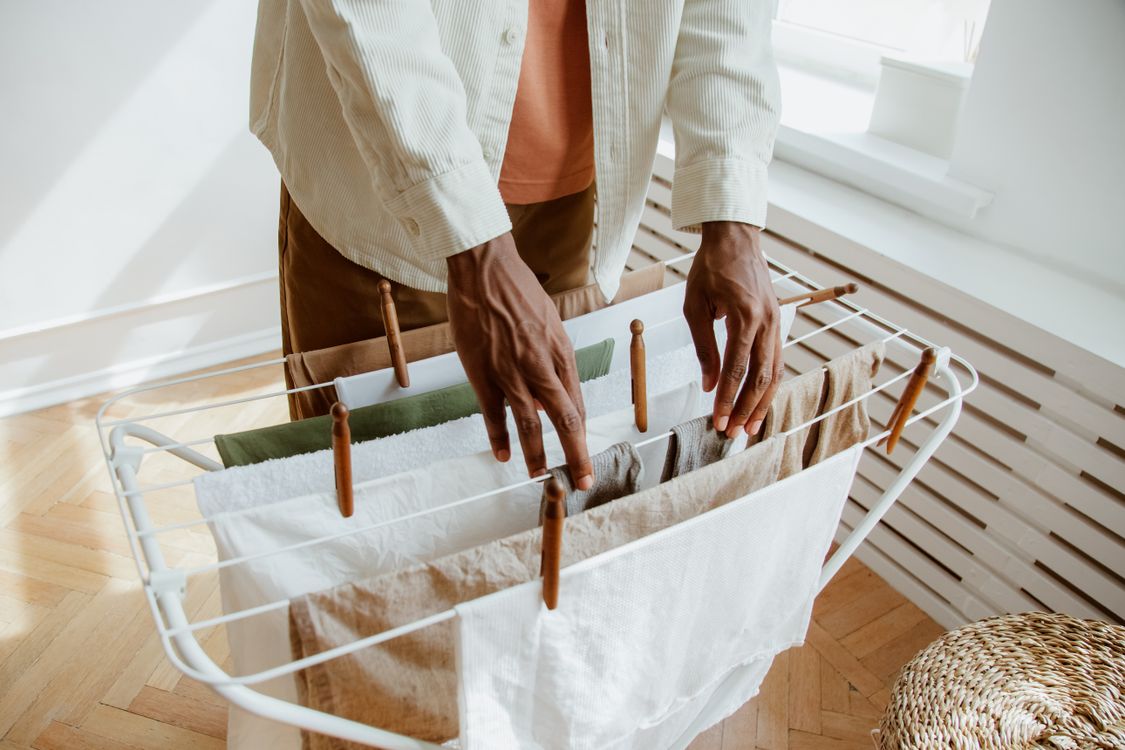
Start in the washer: spin out more water
The single most effective change happens before your clothes ever touch the rack. The more water you remove in the wash, the faster everything dries and the less time bacteria have to work.
- Run an extra spin cycle. A second high-speed spin (1,000–1,400 RPM) can pull out a surprising amount of leftover water, especially from towels and jeans.
- Don’t overload the drum. Clothes need room to fling water outward during the spin. A packed load stays soggier.
- Use the right amount of detergent. Leftover soap residue attracts moisture and holds odor, so measure carefully rather than eyeballing it.
If you tend to pour detergent by feel, it’s worth reading up on how much detergent you actually need — using less genuinely helps clothes rinse cleaner and dry fresher.
The towel trick for delicates and thick items
For sweaters, thick socks, or anything you can’t spin hard, borrow a trick that travelers swear by. Lay the wet item flat on a large, dry bath towel, roll the two up together like a sleeping bag, then press down along the roll with your body weight.
The dry towel wicks away a remarkable amount of moisture in about a minute. Unroll, reshape the garment, and it will dry hours faster on the rack. This is especially useful for knitwear that you’d otherwise lay flat, where slow drying is the biggest musty-smell risk.
Airflow is everything: how to set up your drying space
Still air is the enemy. Moving air is your dryer replacement. You want a steady breeze passing over and between garments so moisture evaporates and gets carried away instead of settling back into the fabric.
Use a fan — the cheapest dryer you own
Point an ordinary box fan or oscillating fan directly at your drying rack on medium speed. This one change can cut indoor drying time roughly in half and dramatically reduces the chance of any smell developing. A basic fan costs $20–$40 and uses far less electricity than a dryer.
Space clothes out generously
Crowded garments trap humidity between them. Hang items with a few inches of gap, turn thick waistbands and seams outward, and hang shirts on hangers rather than folding them over a bar. If you’re tight on space, the right rack makes a big difference — these drying rack setups for small apartments are built to maximize airflow in a tiny footprint.
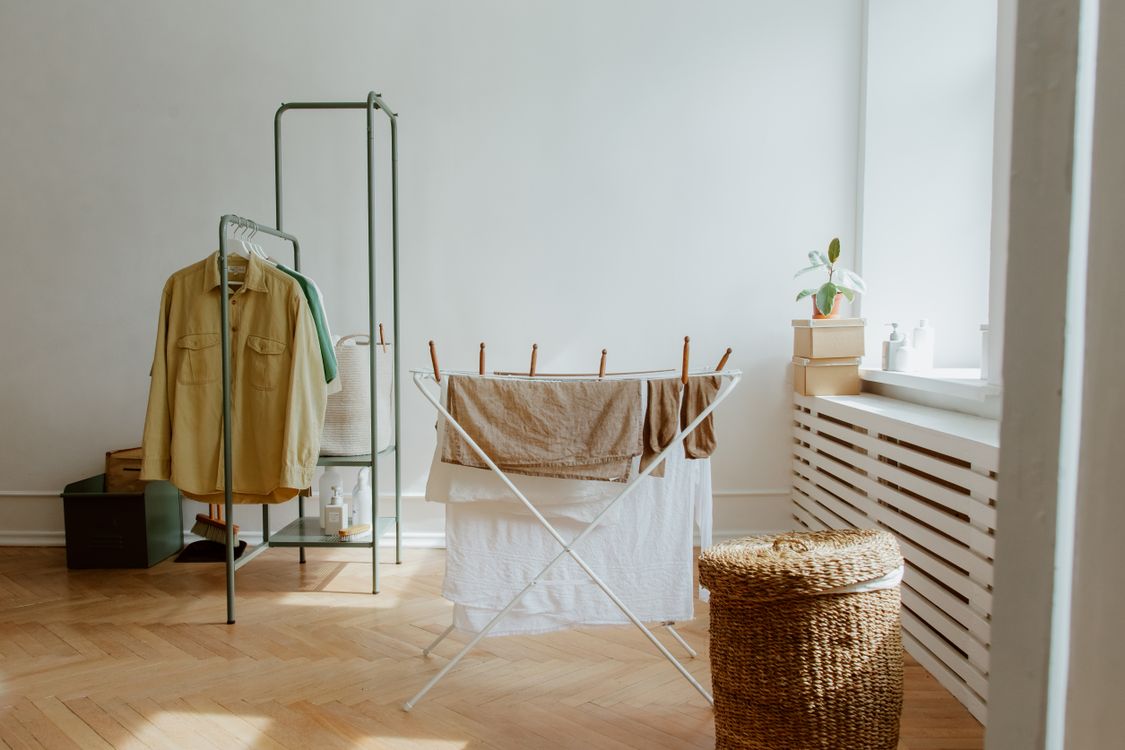
Control the humidity in the room
A load of wet laundry can release several liters of water into the air of a small room. If that moisture has nowhere to go, it slows drying and can even cause condensation on your walls and windows. Managing room humidity is half the battle.
- Crack a window, even a couple of inches, to let humid air escape and dry air in.
- Run the bathroom or kitchen exhaust fan if you’re drying nearby.
- In damp climates or winter, a small dehumidifier ($40–$120) speeds drying and protects the room from mold.
- Avoid drying clothes in a closed bedroom overnight, where humidity and stagnant air collect.
The same warm-versus-cool logic that applies to washing applies here: warmer, drier air holds and removes more moisture. If you’re ever unsure which settings help clothes come out cleaner to begin with, this guide to picking the right water temperature for every load is a useful companion.
Never let clothes sit — and fix a smell if it happens
Timing matters as much as airflow. The moment a wash cycle ends, hang the load immediately. Clothes left balled up in the machine for even a few hours are already growing the bacteria that cause odor, and no amount of drying will fully remove that smell afterward.
If a load does come out musty, don’t just re-dry it. Rewash on a warm cycle with a cup of white vinegar in the rinse (never mix vinegar with chlorine bleach — the combination releases toxic fumes). Vinegar neutralizes odor and cuts detergent residue. For persistent smells, an oxygen-bleach soak in warm water for an hour before washing works well on whites and colors alike. The EPA WaterSense laundry products has solid, no-nonsense guidance on laundry basics if you want to go deeper.
Dry different fabrics the right way indoors
Not everything wants to dry the same way, and matching your method to the fabric keeps clothes fresh and in good shape. A few simple rules cover almost everything in your laundry basket.
- Cotton T-shirts and shirts: hang on plastic or wooden hangers so they dry with fewer wrinkles and better airflow around the whole garment.
- Jeans and heavy cotton: turn inside out and hang by the waistband, giving the thick seams the most exposure to moving air.
- Sweaters and knits: dry flat on a mesh rack after the towel-roll trick, never on a hanger, which stretches the shoulders.
- Towels and bedding: these hold the most water and take longest, so give them the fan and the most open space.
- Activewear and synthetics: these dry fast but trap odor, so make sure they get real airflow rather than being bunched together.
Positioning the heaviest items closest to the fan, and lighter items farther out, lets a single fan do double duty. You’re essentially building a tiny wind tunnel prioritized by how wet each thing is.
Common mistakes that lock in the smell
Most people who battle musty laundry are making one of a handful of avoidable mistakes. Fixing even one usually makes an immediate difference.
The biggest culprit is drying a load that wasn’t fully clean to begin with. If odor-causing bacteria survived a lukewarm, overcrowded wash, they simply wake back up as the fabric dries. Wash smelly items like gym clothes and towels in warm water with the correct dose of detergent, and the drying stage has far less to fight.
The second mistake is pulling clothes off the rack while they’re still slightly cool and damp, then folding and putting them away. Trapped moisture inside a folded stack in a closed drawer is the perfect environment for that basement smell to bloom over a day or two. Always let clothes dry completely, then give them a few extra minutes in open air before folding.
Finally, drying in a room that never gets fresh air — a windowless bathroom, a packed closet, a sealed bedroom — recycles the same humid air over the laundry all night. Even a slightly open door plus a fan beats a warm but stagnant space every time.
Your quick indoor-drying routine
Put it all together and the musty smell simply doesn’t get a chance to form. Spin the load twice, hang it the second the cycle ends, space everything out with a fan running, and crack a window or run a dehumidifier until the clothes are bone dry — not just “dry enough.”
Your next step: tonight, before you go to bed, set up a fan next to your drying rack and open a window an inch. Check the clothes in the morning. That one small habit is usually the difference between laundry that smells like a damp closet and laundry that smells like nothing at all — which, when it comes to drying clothes indoors, is exactly what you want.

Felipe Amaral writes about laundry and clothing care for real life — small apartments, busy weeks and clothes you actually want to last. Based in Denver, Colorado, he’s made every laundry mistake in the book so you don’t have to.