
If your freshly washed towels feel stiff, smell a little sour, or leave your skin itchy, the culprit is almost never too little detergent. Nine times out of ten, it is too much.
Figuring out how much detergent you actually need is one of those small laundry skills that saves money, protects your clothes, and keeps your washer running better. The honest answer surprises most people: you are probably using two to four times more than the job requires.
Why more detergent does not mean cleaner clothes
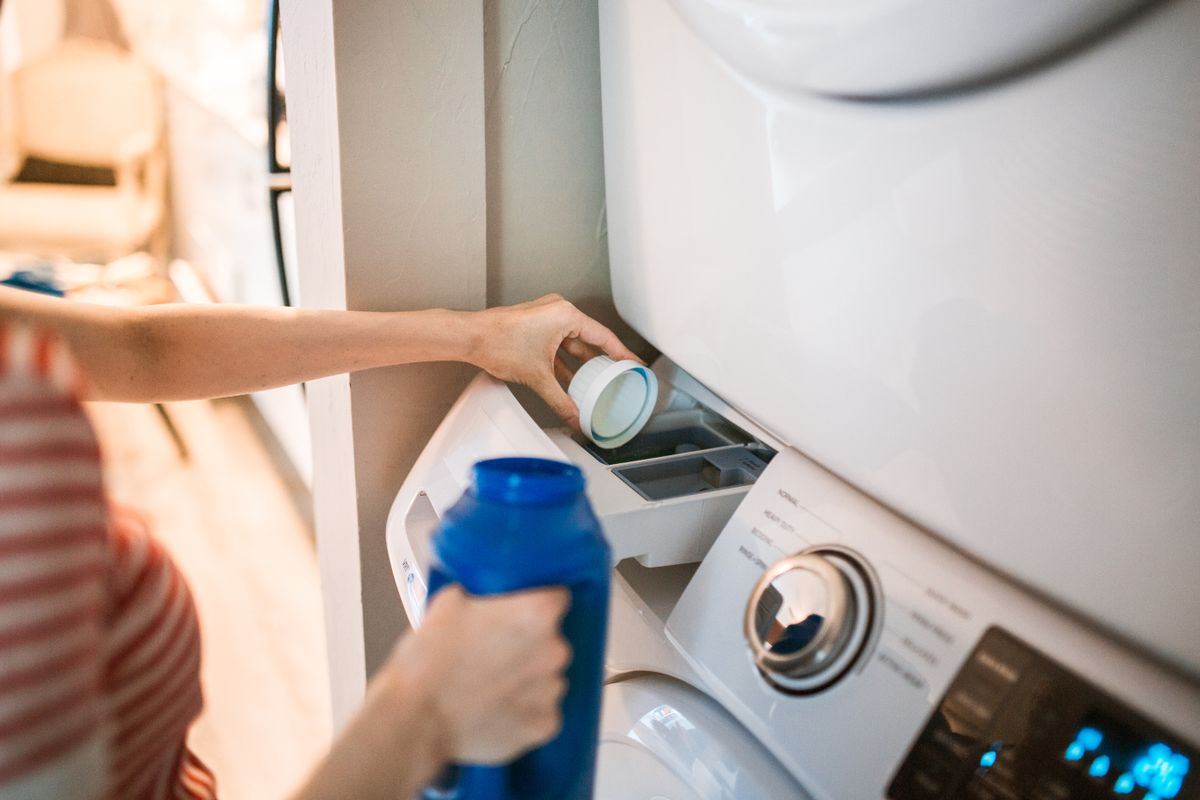
Detergent works by lifting soil and oils into the wash water so they can rinse away. Once you have enough to do that, extra soap has nothing left to grab onto, so it just stays behind in the fabric.
Using more than you need leaves residue behind, and that leftover residue is what makes towels scratchy and dark clothes look dull and chalky. It also feeds odor-causing bacteria, which is why an over-soaped load can come out smelling worse than it went in.
Modern detergents are highly concentrated, so the dose that worked a decade ago is often double what today’s formulas need. When you get the amount right, your clothes rinse cleaner and the whole load actually feels fresher, a idea I build on in my complete beginner’s guide to doing laundry right.
How much detergent you actually need per load
How much detergent you need depends on load size, soil level, and water hardness, but here are reliable starting points for liquid detergent in a standard machine.
- Small or lightly soiled load: about one to two teaspoons, roughly the bottom of the cap.
- Medium everyday load: about one tablespoon, or the first fill line, not the whole cap.
- Large or heavily soiled load: about two tablespoons, still well under a full cap.
- High-efficiency (HE) machines: use even less, since they run on low water and suds build up fast.
If you use pods, one pod handles a normal load and two are only for very large or very dirty loads. Powder users can start with about two tablespoons and adjust from there.
Reading the cap (it is lying to you a little)
When you are working out how much detergent to pour, the molded lines inside a detergent cap are notoriously vague and tend to encourage overfilling. Many people fill to the top rim, which can be four or five times a real dose.
Look closely and you will usually find faint fill lines well below the rim; those are the actual doses. For everyday loads, aim for the lowest line, and treat the top of the cap as reserved for large, filthy loads only.
How water hardness changes the amount
Hard water, which is common across much of the country, contains minerals that reduce how well detergent lathers and cleans. In hard-water areas you may need slightly more detergent, or a water softener, to get the same result.
Soft water is the opposite; detergent goes much further, and using a full dose almost guarantees residue. If you are not sure which you have, cheap test strips from a hardware store cost a few dollars and take the guesswork out. Adjusting your dose to your specific water is one of the fastest ways to stop wasting detergent without sacrificing a clean wash.
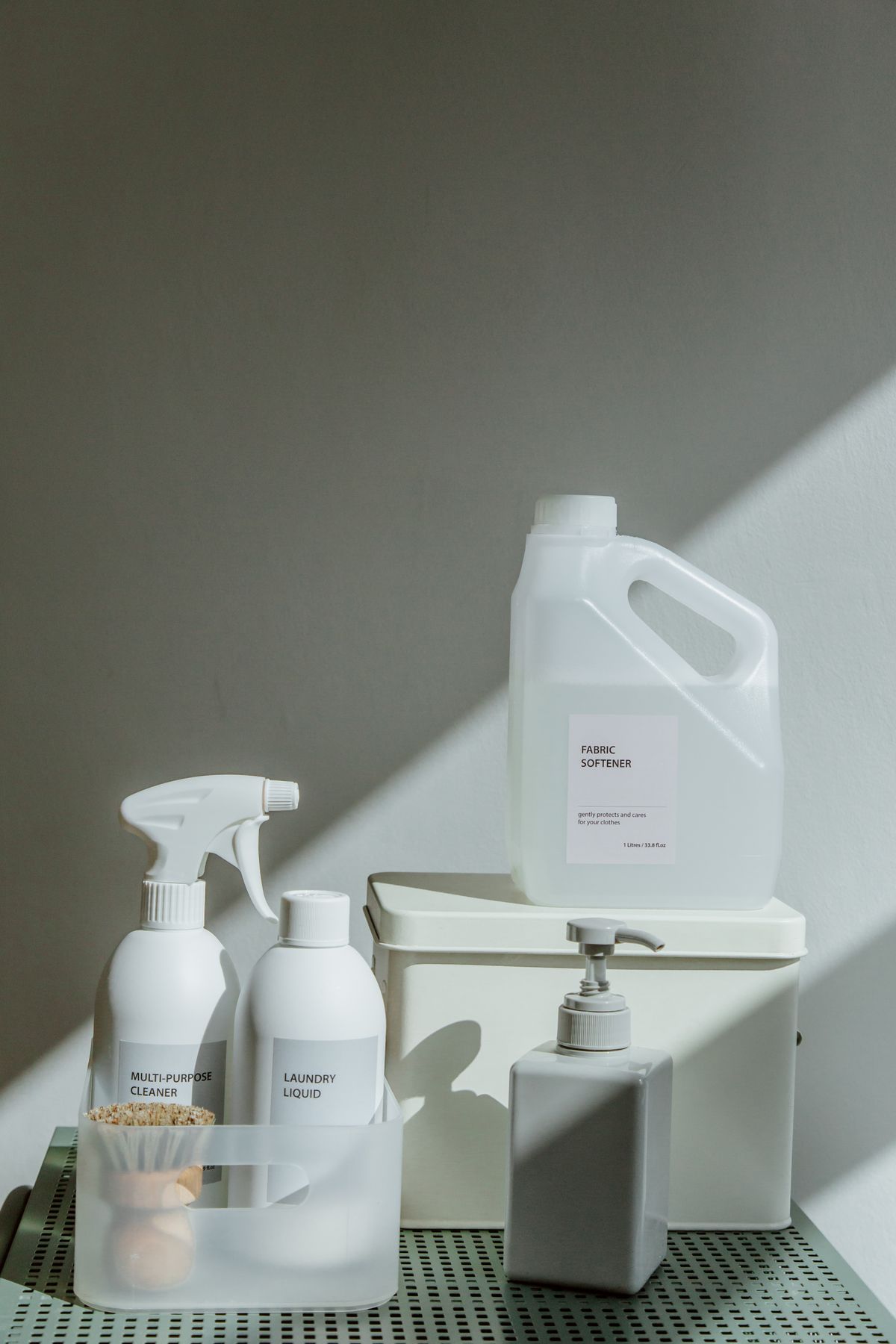
Choosing the right product type matters too. A good all-purpose liquid or an oxygen-based booster covers most needs without harsh additives, and the EPA WaterSense laundry products offers solid guidance on dosing for your water and machine.
Signs you are using too much
Your clothes and your machine both send clear signals when the dose is too high. Learning to spot them lets you dial the amount back with confidence.
Watch for stiff or scratchy towels, a filmy residue on dark clothes, skin irritation, and lingering odors even after washing. Inside the machine, look for a sticky buildup around the drum and gasket. Cutting your dose in half for a few loads usually clears these up fast, and getting the wash temperature right, which I cover in picking the right water temperature for every load, helps rinse residue away too.
Small-space and budget benefits
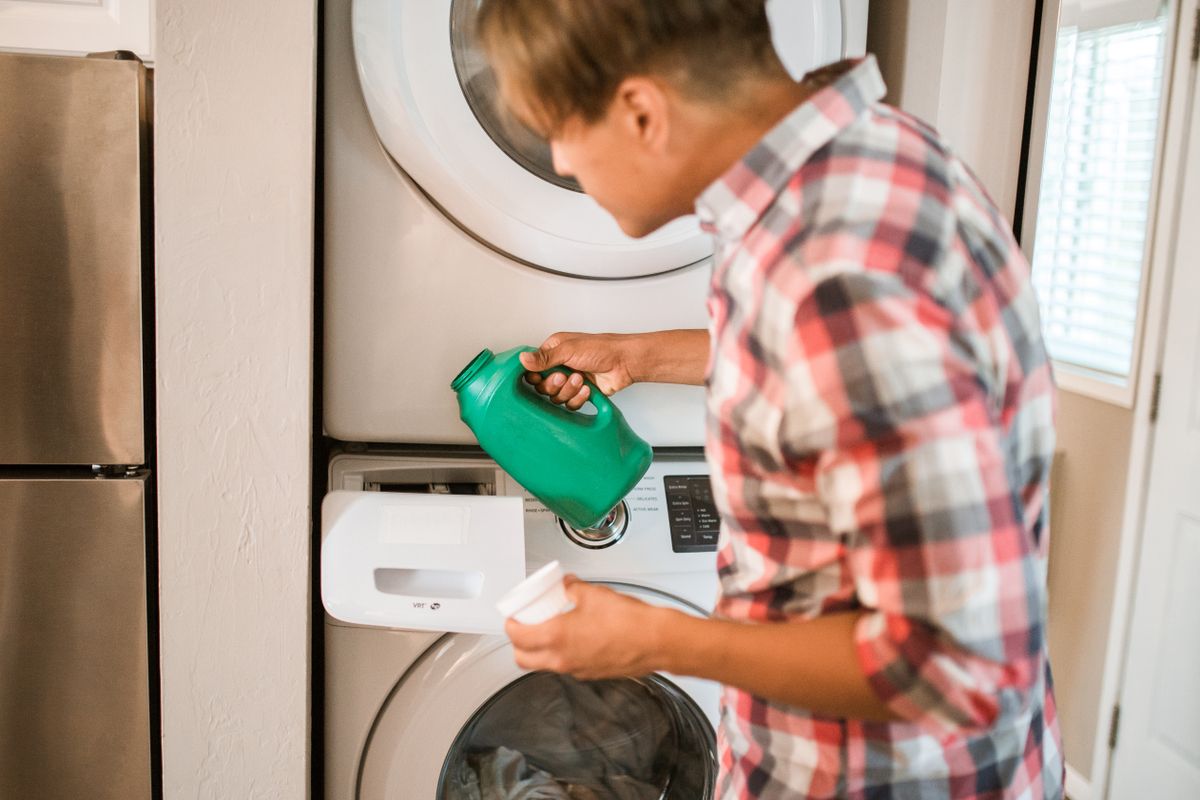
Using less detergent is a quiet win for renters and small-space dwellers. A single bottle lasts far longer, which means fewer bulky containers to store in a tight laundry closet and less to haul to a shared laundry room.
The savings add up. Cutting your dose in half can effectively double the life of a detergent bottle, turning a 15-dollar jug into a much better value over a year.
There is an environmental payoff as well, since less detergent means fewer chemicals rinsing into the water system and less plastic packaging over time. It is a rare case where the cheaper choice is also the better one for your clothes.
How to find your perfect dose
Start your next load with half of what you normally use and see how the clothes come out. If they are clean and residue-free, try trimming a little more; if not, nudge it back up slightly.
Within a few loads you will land on how much detergent works for your home, a dose that cleans well without waste, and your clothes will thank you for it. Keep a small measuring spoon by the machine so the right amount becomes automatic instead of a guess. None of this requires new gear or a chemistry degree; it is simply a matter of watching the amount you pour, the water you have, and how your clothes feel coming out. Once those three line up, every load gets easier and your clothes last noticeably longer.
Matching detergent type to your load
Once you know how much detergent to use, the next question is which kind. The three common formats each have a place, and picking well means you use even less.
When deciding how much detergent to use, the format matters as well; liquid detergent is the most forgiving and dissolves well in cold water, which makes it a safe default for mixed everyday loads. Powder tends to be cheaper per load and excels on ground-in dirt, though it can leave residue in cold or hard water if you overdose. Pods are the most convenient and pre-measured, but they remove your ability to fine-tune the amount, so they suit people who want simplicity over control.
For most small households, a single bottle of concentrated liquid plus a tub of oxygen booster for tougher loads covers nearly everything without a cabinet full of products. This lean approach pairs naturally with a minimalist storage setup, similar to the mindset in my guide on how to organize a tiny closet without renovating.
A quick word on safety
Getting the dose right also means handling products safely. Store detergent, especially colorful pods, well out of reach of children and pets, since they are easily mistaken for candy or toys.
If you ever add a whitening booster to a load, never mix chlorine bleach with ammonia or with vinegar, because the combination releases dangerous fumes. When chlorine bleach is called for, use it on its own, in a well-ventilated space, and follow the bottle’s dilution instructions exactly.
What happens when you finally cut back
People who finally learn how much detergent they actually need almost always notice the change within a week. Towels regain their fluff, dark clothes look richer, and that faint musty smell in the laundry finally disappears.
Once you learn how much detergent your loads truly need, your machine benefits too, with less gunk building up around the drum and door seal, which means fewer odor problems down the line. If you have been fighting stiff towels or a smelly washer for years, a smaller dose is very often the single change that fixes both at once, with no special cleaner required. Knowing how much detergent to use is a small habit, but it quietly improves every single load you run from here on out.
Your next step
Before your next wash, dig out the real fill lines on your detergent cap and measure one honest dose. Run the load, feel the difference in how your clothes come out, and you will never go back to eyeballing a full cap again.

Felipe Amaral writes about laundry and clothing care for real life — small apartments, busy weeks and clothes you actually want to last. Based in Denver, Colorado, he’s made every laundry mistake in the book so you don’t have to.