
My first apartment laundry setup was a stacked washer and dryer crammed into a closet the size of a phone booth, with a folding door that never quite closed over the detergent jug. Every wash day meant a small avalanche of dryer sheets and stray socks. It worked, eventually, but only after I stopped fighting the space and started organizing my tiny laundry closet like it mattered.
A tiny laundry closet can be genuinely pleasant to use if you treat every inch as valuable real estate. The trick is going vertical, containing the clutter, and giving each item one obvious home. Here is how to turn a cramped closet into a functional little laundry room.
Start Your Tiny Laundry Closet by Measuring and Clearing Out
Before you buy a single organizer, measure everything: the width, depth and height of the closet, the clearance above the machines, and the depth of the door frame. In a tiny laundry closet, a two-inch miscalculation can mean a shelf that will not fit.
Then pull everything out and be ruthless. Half-empty bottles, mystery attachments and products you never use are stealing space you cannot spare. Keep only what you actually reach for, and you will be surprised how much room appears.
Take a photo of the empty closet on your phone while you plan. Being able to look at the blank space, with your measurements noted, stops you from impulse-buying an organizer that looks great online but swallows the only clearance you had. Planning on paper first is free; returning the wrong shelf is a hassle.
Go Vertical: Use the Walls and Height
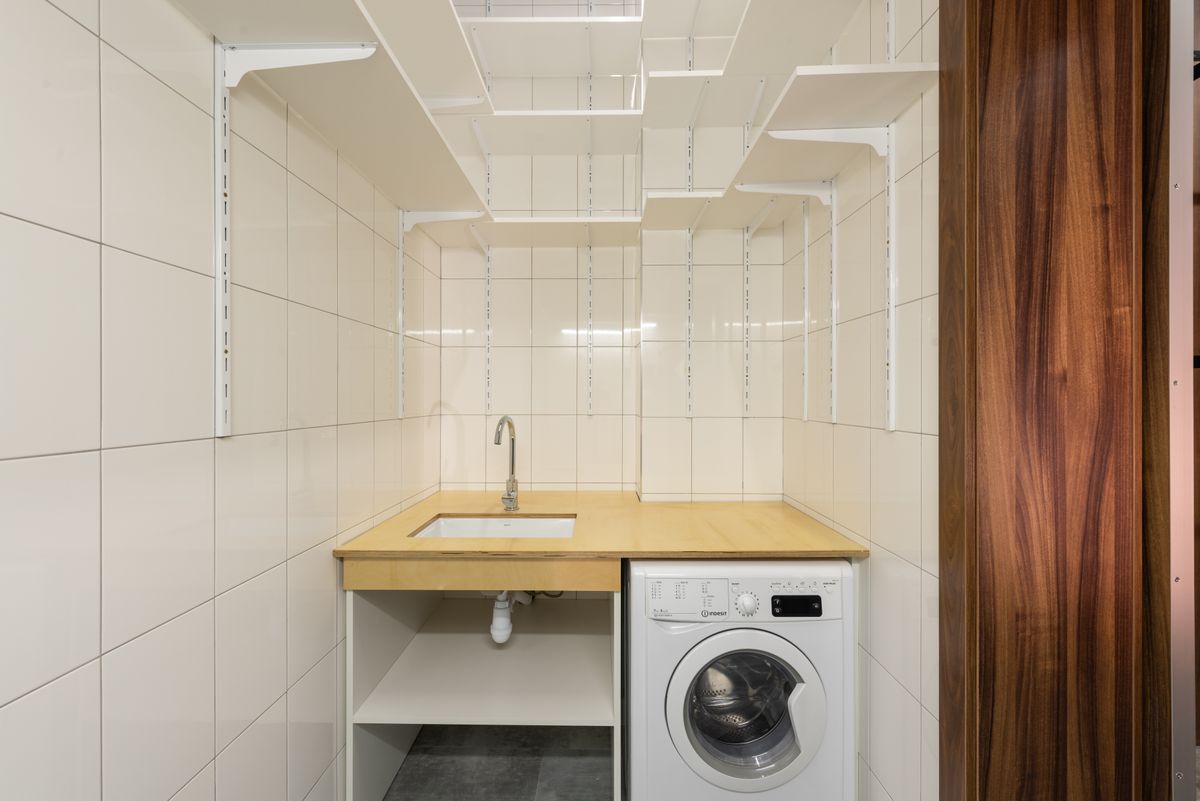
The floor space in a laundry closet is spoken for by the machines, so the real opportunity is upward. The wall above the washer and dryer is usually wasted, and it is prime storage territory.
Shelving that works
Install one or two shelves above the machines for detergent, dryer sheets and a small basket of odds and ends. Floating shelves cost little and free up the floor entirely. Renters who cannot drill can use a tension-rod shelf or an over-the-machine shelving unit that stands on its own legs.
Stackable wire shelves that sit directly on top of a front-loading dryer are another renter-friendly win, adding a whole extra tier of storage without a single screw. Look for adjustable feet so the unit sits level on a machine that vibrates, and keep the heaviest items on the lowest shelf so nothing topples during the spin cycle.
Add a slim tension rod near the top for hanging freshly ironed shirts or drip-drying delicates. A few adhesive hooks on the door handle the lint brush, measuring scoop and a spare tote bag.
The inside of the door is the most overlooked surface in any tiny laundry closet. An over-the-door organizer with small pockets holds stain pens, spare buttons, a sewing kit and clothespins, all visible at a glance and completely off your shelves. Just confirm the door still closes with the organizer loaded before you commit to it.
The inside of the door is the most overlooked surface in any tiny laundry closet. An over-the-door organizer with small pockets holds stain pens, spare buttons, a sewing kit and clothespins, all visible at a glance and completely off your shelves. Just confirm the door still closes with the organizer loaded before you commit to it.
Contain the Clutter with Bins and Labels
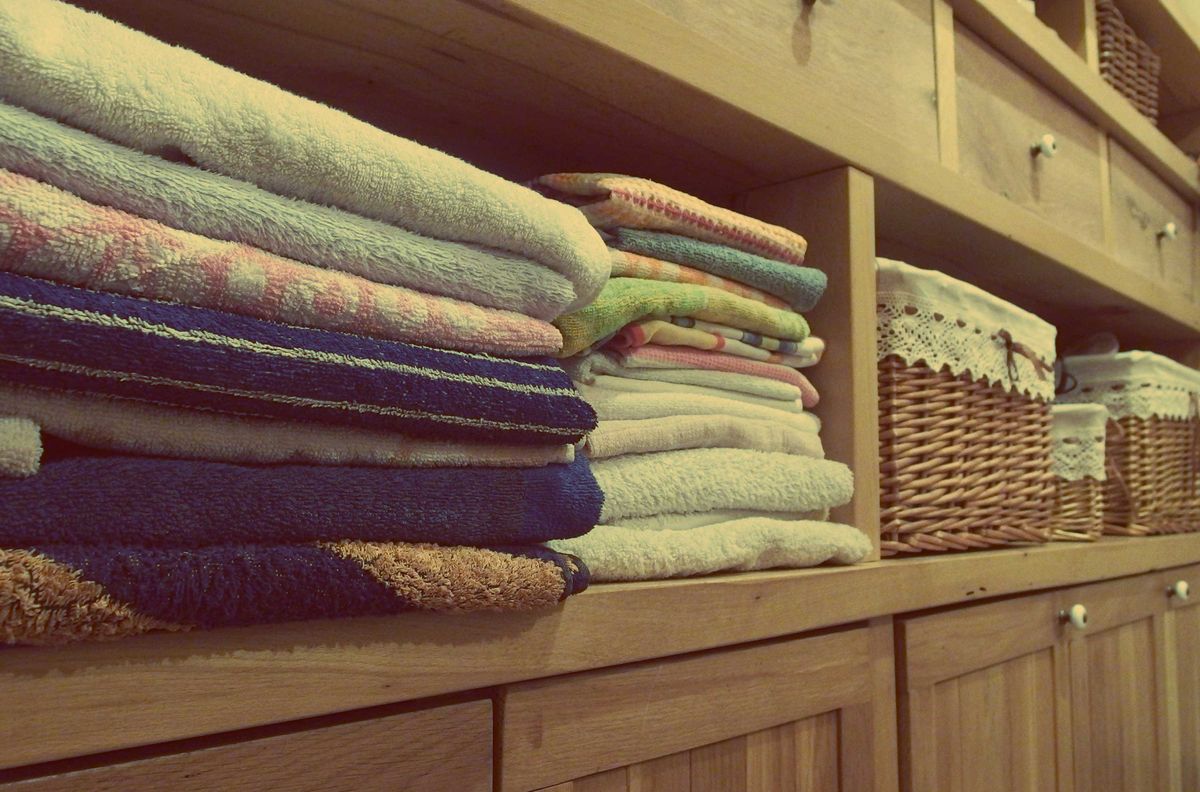
Loose bottles and boxes are what make a small space read as chaotic. Corral everything into a few matching bins, one for laundry products, one for stain-fighting supplies, one for lost socks and rags, and the whole closet instantly looks calmer.
A handful of inexpensive pieces does most of the work in a tiny laundry closet:
- Two or three matching fabric or clear bins for grouping products.
- One or two floating or tension-rod shelves above the machines.
- An over-the-door pocket organizer for small odds and ends.
- A slim rolling cart or hamper for sorting between the machines.
- A wall-mounted folding drying rack or retractable line.
Clear or labeled bins mean you can find what you need without unstacking the whole shelf. Decanting powder detergent into a single airtight canister with a scoop saves space and looks tidier than a bulky box.
Group bins by how often you use them, not by how they look. Everyday detergent and dryer balls belong at eye level within easy reach; the bleach, the carpet spot-cleaner and the seasonal items go up high or down low. Putting your most-used products in the prime zone is what actually saves you time on laundry day.
If you use any chlorine bleach, store it separately and never next to ammonia or vinegar (the EPA Safer Choice warns these combinations create toxic gases), and never mix them, since the combination releases dangerous fumes.
Make Room for Sorting and Folding
Even a tiny laundry closet needs somewhere to sort dirty clothes and fold clean ones. A slim rolling cart with two or three fabric bins tucks between or beside the machines and pulls out on laundry day for sorting lights and darks.
If there is a gap of even nine or ten inches beside the machines, a tall narrow slide-out cart on wheels will fit there and vanish when pushed back. These gap carts are made exactly for this problem and turn dead space into a full column of storage for bottles and boxes.
A three-section hanging sorter mounted on the wall is another space-smart option, letting you pre-sort lights, darks and delicates as you undress rather than dumping everything into one hamper and untangling it later. In a shared household, labeled sections keep everyone’s system honest and cut the sorting time on wash day to almost nothing.
For folding clean laundry, a small pull-out shelf or a lightweight board laid across the top of a front-loader gives you a work surface that disappears when you are done. In the very tightest spaces, folding happens on the bed, and that is perfectly fine.
If you have a top-loading washer, that flat lid is precious counter space you already own. A removable tray or a cut-to-fit board turns it into a folding station between cycles. Just clear it before the next load so nothing falls behind the machine, which in a tiny closet is a lost-sock black hole.
Handle Drying in a Small Footprint

Not everything can go in the dryer, so build in a little drying capacity. A wall-mounted accordion rack folds flat against the wall and extends only when you need it, holding a surprising number of delicates.
A retractable clothesline strung across the closet or a tension rod does the same job for next to nothing. Position drying items where airflow can reach them so nothing stays damp long enough to smell.
Air circulation matters more than most people realize in an enclosed closet. Leaving the door cracked or fitting a small vented louver door prevents humidity from building up, which is what causes that musty smell and, over time, mildew on the walls. If your closet has no airflow at all, run a small fan for an hour after hanging wet items.
Keep the System Running
Once a month, take five minutes to reset the whole closet. Wipe down the top of the machines where lint and dust settle, toss expired or crusted-over detergent pods, run an occasional energy-efficient wash cycle to keep the machine fresh, and check that the dryer vent hose behind the unit is not kinked or clogged. A quick reset keeps a small space from tipping back into chaos, and it is far easier than letting it snowball into a weekend project.
The best organized tiny laundry closet still needs a light touch of maintenance. Return each item to its bin after every load, wipe up spilled detergent right away, and do a quick declutter every few months so products do not creep back in.
Your next step: spend fifteen minutes today measuring your closet and pulling out everything you never use. That single clear-out is usually enough to reveal the space you have been missing, and it makes every organizer you add afterward work twice as hard.

Felipe Amaral writes about laundry and clothing care for real life — small apartments, busy weeks and clothes you actually want to last. Based in Denver, Colorado, he’s made every laundry mistake in the book so you don’t have to.