
There’s a special kind of heartbreak in pulling your favorite sweater out of the dryer and finding it now fits a small child. That sinking feeling is almost universal, and most people assume the garment is ruined for good.
Here’s the hopeful news: you can often fix shrunken clothes right at home with nothing more than water, a gentle conditioner, and a little patience. It doesn’t work every time, but it works often enough to be worth trying before you give up on a beloved piece.
Why clothes shrink in the first place
Understanding the cause tells you whether a fix is even possible. Shrinkage happens when heat and agitation cause fibers that were stretched during manufacturing to relax back to their natural, shorter state.
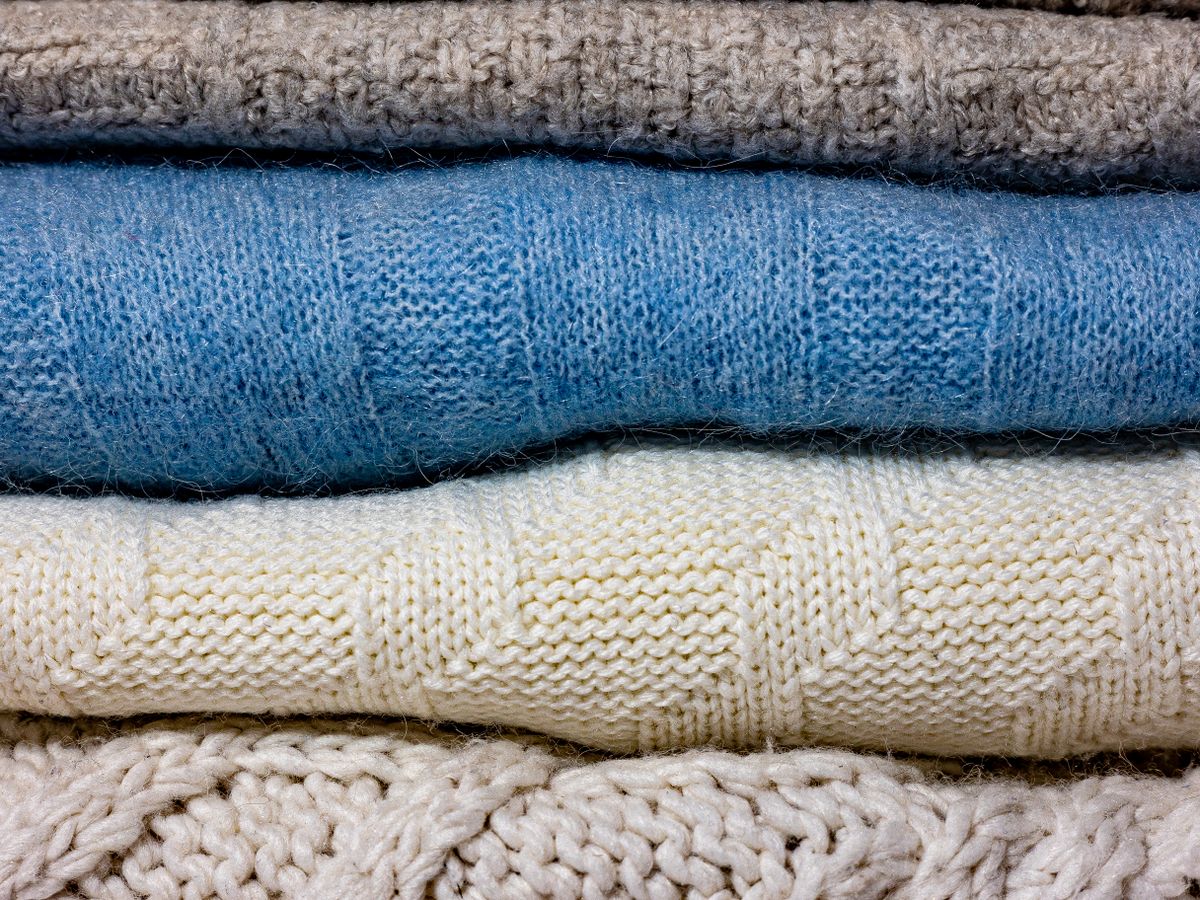
This is why natural fibers like wool, cotton, and cashmere shrink so easily, while polyester and nylon barely budge. The good news is that relaxed fibers can often be coaxed back, especially in wool and cotton knits.
The basic method to fix shrunken clothes
The core technique relaxes the fibers again so you can gently stretch them back toward their original size. It’s simple, cheap, and works on most natural-fiber garments.
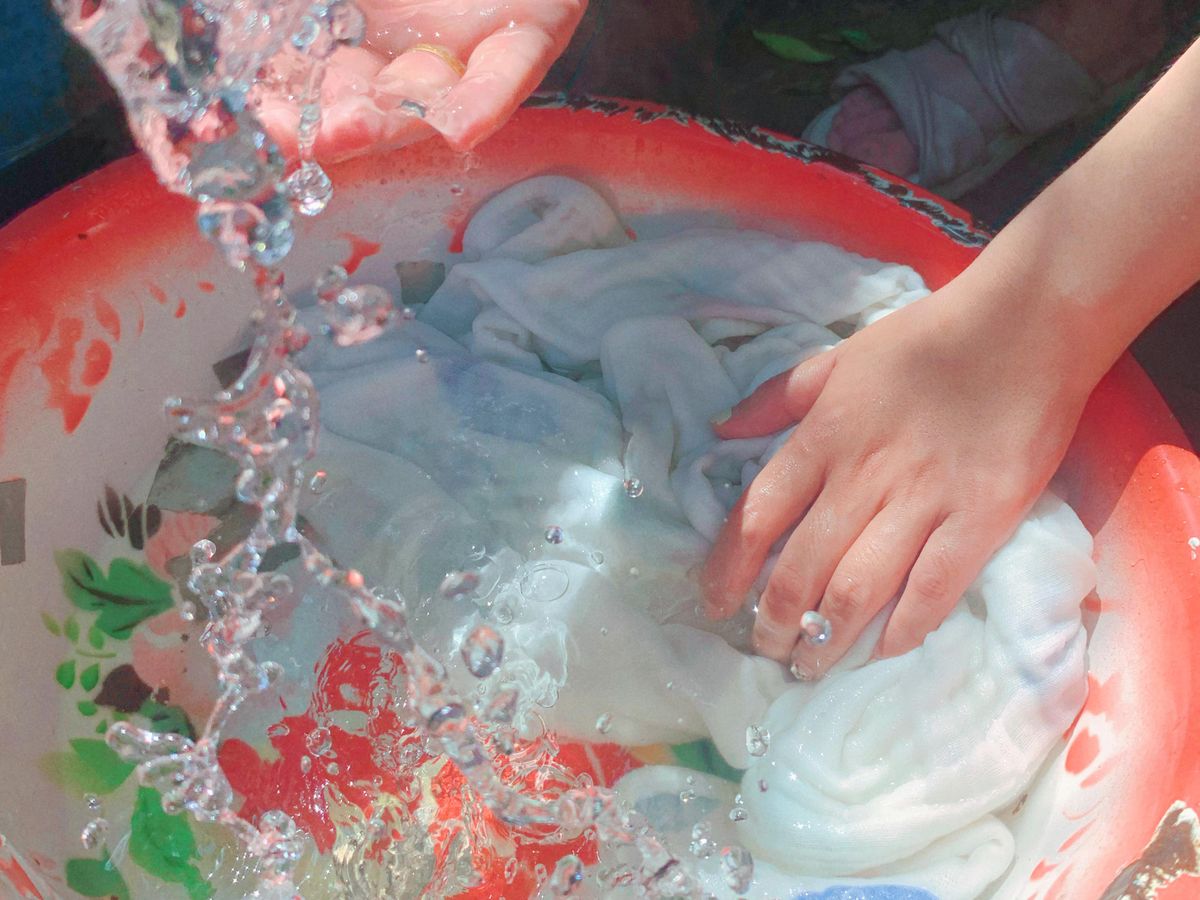
You’ll need lukewarm water, a basin or sink, and a tablespoon or two of hair conditioner or baby shampoo. The conditioner lubricates the fibers so they slide and stretch instead of resisting.
Step-by-step unshrinking
- Fill a basin with lukewarm water and mix in a tablespoon of hair conditioner.
- Submerge the garment and gently swish, then let it soak for about 30 minutes.
- Drain the water and press (do not wring) the garment to remove excess moisture.
- Lay it flat on a towel and gently stretch it back toward its original dimensions.
- Pin the edges if needed, and let it air dry flat, re-stretching once or twice as it dries.
Patience is everything here. Stretch gradually in small increments rather than yanking, which can distort the weave or tear seams.
Fabric-specific tips that improve your odds
Different materials respond differently, so tailoring your approach to the fabric raises your success rate considerably.
Wool and cashmere respond best to the conditioner soak, since the fibers are naturally elastic when relaxed. Cotton often needs a gentler tug and may only regain part of its size. Silk can sometimes be eased back with a very mild soak, while heavily synthetic blends rarely shrink or unshrink much at all.
If your sweater is wool, prevention is far easier than the cure. Our guide on how to wash wool sweaters without shrinking them keeps this whole ordeal from happening in the first place.
Reshaping and drying without re-shrinking
Getting the size back is only half the job; drying it correctly is what locks the fix in place. This is the step where people accidentally undo all their work.
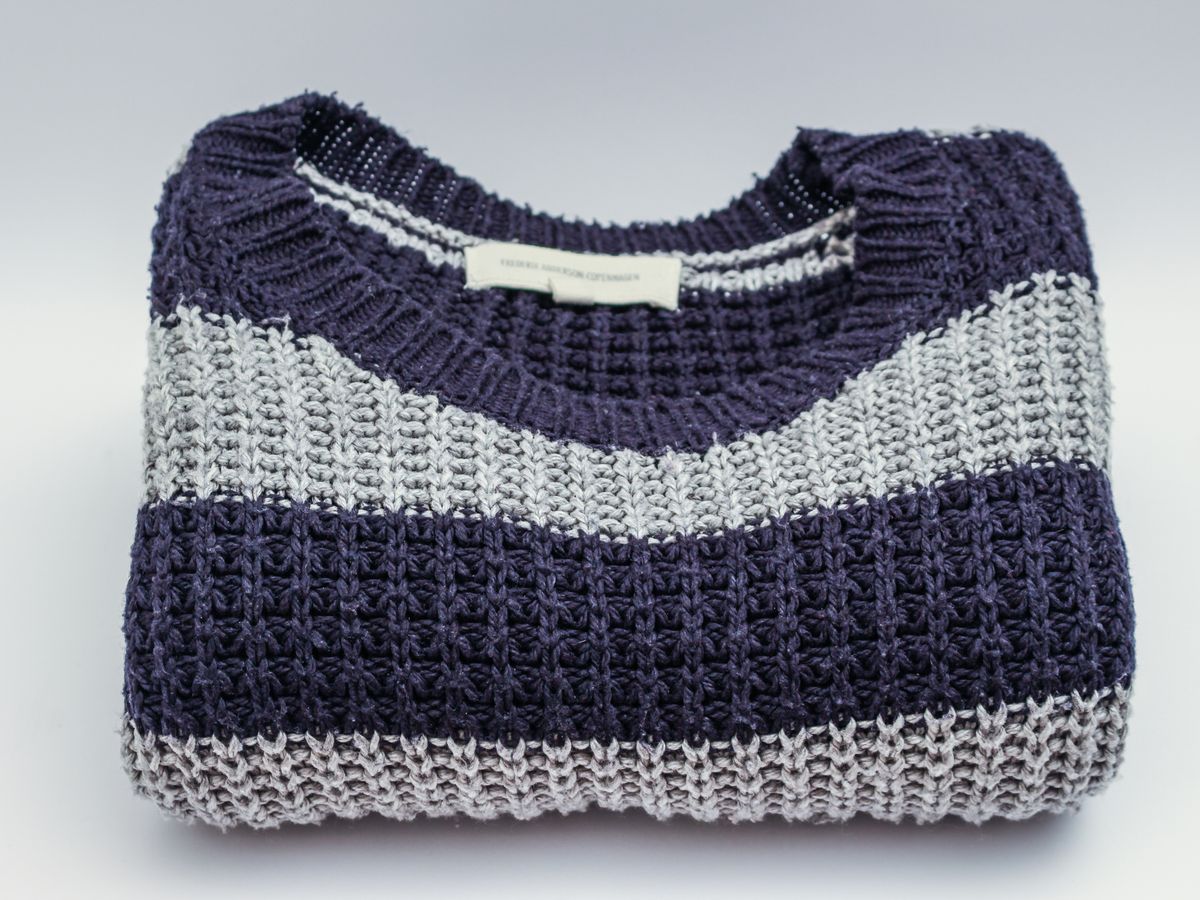
Always dry a reshaped garment flat, never in the dryer and never hung, which would stretch it unevenly. As it dries, come back every 20 to 30 minutes to gently coax it wider and check the shape.
Keep it away from direct heat and sunlight, both of which can re-shrink the fibers you just relaxed. Cool, patient air drying is the safest finish.
When a garment is truly beyond saving
Not every shrunken item comes back, and it helps to know the signs early so you don’t waste an afternoon. Felted wool, where the fibers have matted into a dense, fuzzy mass, is usually permanent.
Severe shrinkage of more than a couple of sizes, or fabric that has hardened and lost its stretch, is also unlikely to recover fully. In those cases, consider repurposing: a felted wool sweater makes great cushion covers or mittens.
Prevent shrinking from happening again
The best fix is never needing one. A few habits protect your clothes far more reliably than any rescue method.
Wash in cold water, since heat is the main trigger for shrinkage, and knowing which water temperature to use for each load makes this automatic. Air dry anything natural or fitted, and when you must use the dryer, choose the lowest heat setting.
If you air dry indoors, good airflow prevents that musty smell; our tips on how to dry clothes indoors without the musty smell make line drying painless even in an apartment.
How much shrinkage can you actually reverse?
Setting realistic expectations saves frustration. In most cases, the soak-and-stretch method recovers a garment that shrank by one size, sometimes a size and a half if the fabric is forgiving wool or cotton.
What you generally cannot do is turn a doll-sized disaster back into an adult medium. If a sweater lost three sizes, the fibers have usually relaxed and locked too far to fully rebound. Aim to recover enough to make the piece wearable again, not necessarily perfect.
It also helps to measure before and after. Jot down the target width and length, then stretch toward those numbers gradually so you know when to stop rather than overstretching into a misshapen result.
Alternative unshrinking methods to try
If plain conditioner does not do enough, a couple of variations can squeeze out extra give. Some people add a splash of white vinegar to the soak, which helps relax wool fibers; just never combine vinegar with any bleach product, as the mix creates toxic fumes.
For stubborn cotton, a gentle steam while stretching can loosen the weave enough to pull it back. Hold a steamer a few inches away, warm a section, and ease it wider by hand, working slowly across the whole garment.
The baby-shampoo shortcut
No hair conditioner on hand? Baby shampoo works just as well and is often gentler on delicate fibers. The goal either way is simply to coat the fibers so they slide past each other instead of gripping, which is what makes the stretching possible.
The role of care labels and fabric content
Before you wash anything precious, the care label is your best insurance against ever needing this fix. It tells you the safe water temperature, whether the item can be machine dried, and if it needs hand washing. The EPA WaterSense laundry products has a clear primer on reading these symbols.
Checking the fabric content matters too. A high-wool or all-cotton garment is far more shrink-prone than a poly blend, so treat those pieces with extra caution from the very first wash. A little label-reading now prevents a lot of heartbreak later.
Keep in mind that a garment can be gently re-stretched more than once over its life. If it shrinks slightly again after a future wash, you can simply repeat the soak-and-stretch, so one small mistake in the dryer is rarely the end of the road.
What to do if only part of a garment shrank
Sometimes a shirt fits fine but the sleeves crept up, or a dress shrank in length but not width. Spot-stretching lets you target just the problem area instead of resoaking the whole piece.
Dampen only the affected section with the conditioner solution using a spray bottle or a wet cloth, then gently stretch that part while it dries. This is useful for cuffs, hems, and collars that pulled in more than the rest of the garment.
Work symmetrically so you do not end up with one sleeve longer than the other. Stretch, measure against the matching side, and let each section dry flat before deciding whether it needs another pass.
Conclusion: don’t give up on it too soon
A shrunken sweater isn’t automatically a lost cause. With a conditioner soak, gentle stretching, and flat drying, you can often fix shrunken clothes and give a favorite piece a second life.
Your next step: next time something comes out too small, don’t toss it. Grab some hair conditioner, run the soak-and-stretch method, and you may be surprised how much size you can win back.

Felipe Amaral writes about laundry and clothing care for real life — small apartments, busy weeks and clothes you actually want to last. Based in Denver, Colorado, he’s made every laundry mistake in the book so you don’t have to.