
My first apartment in Denver had a laundry “room” that was really just a closet behind a bifold door, barely wide enough to open the washer lid. For the first year I kept my detergent, dryer sheets, and a half-used bottle of stain remover balanced on top of the machine, where they slid off and cracked open every time I ran a spin cycle. It was chaos, and it made a five-minute chore feel like a battle. I clearly needed to organize laundry supplies before the space could work.
If your setup looks anything like that, the good news is you don’t need square footage to fix it. You need a plan for vertical space, a few cheap containers, and a habit of keeping only what you actually use. Here is exactly how I learned to organize laundry supplies in a small space so everything has a home and nothing ends up on the floor.
Start by editing what you actually own
Before you buy a single bin, empty the whole area onto a towel and look at what accumulated there. Most people are storing three near-empty detergent bottles, a fabric softener they stopped using, and mystery stain sprays from years ago. Organizing clutter just makes tidy clutter, so the first move is to organize laundry supplies by what you truly use.
Keep one of each category: a main detergent, a stain treater, an oxygen booster, and dryer sheets or wool balls. Consolidate duplicate bottles, recycle empties, and set aside anything expired. When you organize laundry supplies down to the essentials, a small shelf suddenly feels roomy.
- Keep: your everyday detergent, one stain remover, an oxygen powder, dryer sheets or wool balls, and measuring cup.
- Consolidate: combine partial bottles of the same product so you free up a slot.
- Toss or recycle: expired products, hardened powders, and anything you haven’t touched in a year.
- Relocate: bulk backups you rarely reach for can live in a hall closet, not your prime laundry zone.

Think vertical: use the walls and the door
In a tight laundry corner, the floor is the enemy and the walls are your best friend. Every item you can lift off the ground is one less thing to trip over or knock into the machine.
Add a shelf or two above the machines
A single wall shelf mounted 12 to 16 inches above your washer holds detergent and a small basket of clips. If you rent and can’t drill, a tension-rod shelf or a freestanding shelving unit that straddles the washer and dryer (often called a laundry pedestal shelf) works without a single screw. Expect to spend $25 to $60 for a decent over-the-machine rack.
Hang an over-the-door organizer
The back of a laundry closet door is prime real estate. A clear over-the-door shoe organizer, which runs $10 to $20, turns into perfect storage for spray bottles, lint rollers, small stain pens, and clothespins. You can see everything at a glance, and nothing steals shelf depth.
Organize laundry supplies in labeled bins
Loose items are what make a laundry area look messy even when it’s mostly clean. Corral them into a few inexpensive containers to organize laundry supplies so the whole space reads as tidy instantly.
Use one bin for dryer sheets and wool balls, one for stray socks waiting on their partners, and a small caddy for stain-fighting tools. A rolling cart that fits in the six-inch gap between a washer and the wall is a small-space classic, holding a surprising number of supplies where dead space used to be. Clear bins beat opaque ones here because you can refill before you run out.
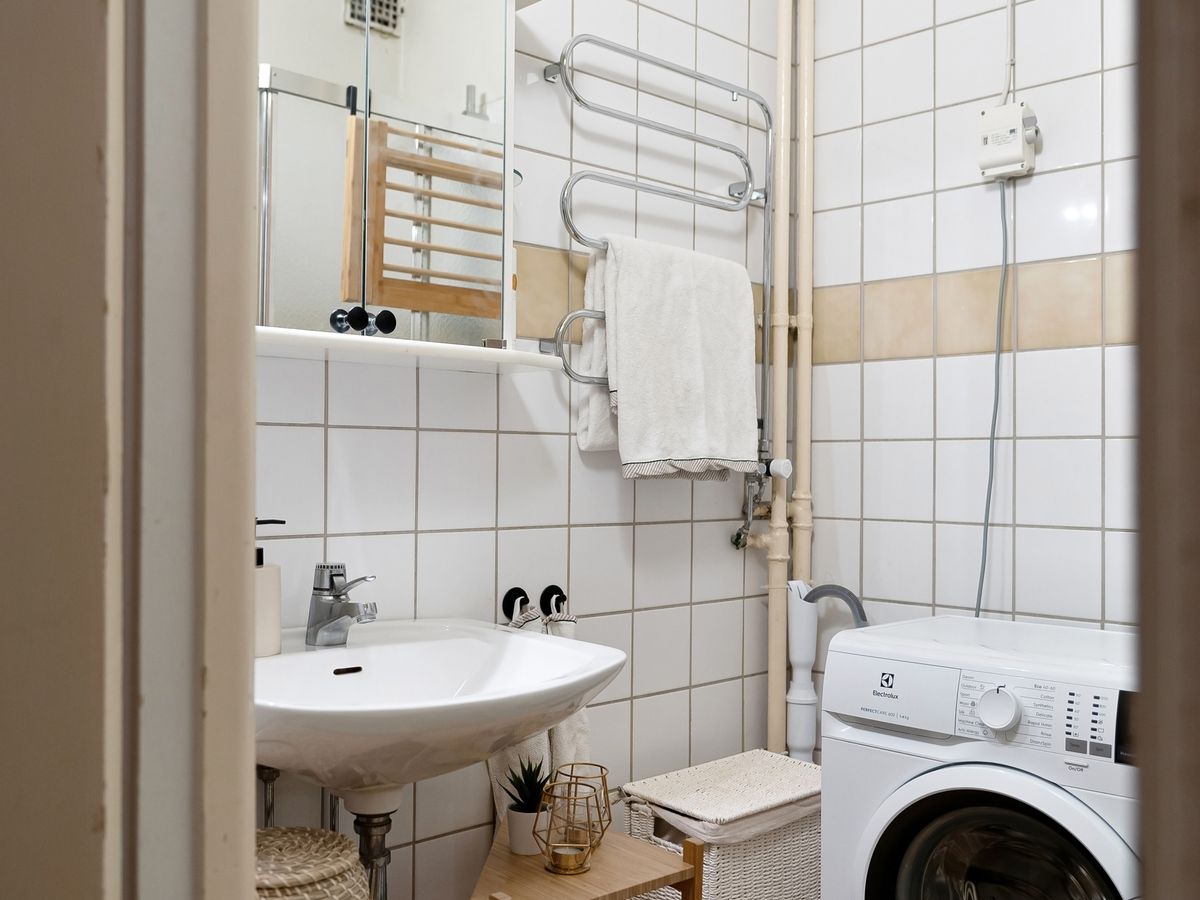
Make measuring and dosing easy
Half the mess in a laundry space comes from pouring. Detergent drips down the bottle, powder scatters, and caps get sticky. A few small tweaks help you organize laundry supplies so your shelf stays clean.
Keep the measuring cup or dosing ball hooked on the bottle or sitting in a small saucer that catches drips. If you use powder, decant it into a wide-mouth jar with a scoop so you’re not wrestling a floppy box. And genuinely, most loads need far less product than the cap suggests, which also means fewer refills to store; I break down the real numbers in my guide on how much detergent you actually need.
Store products safely, especially in shared spaces
Small laundry areas are often shared with bathrooms, kitchens, or hallways where kids and pets pass through, so safe storage matters as much as tidy storage. Organize laundry supplies by keeping concentrated products up high or behind a latched door.
One rule that is non-negotiable: never store or mix chlorine bleach next to ammonia-based cleaners or vinegar. Combining chlorine bleach with ammonia or vinegar creates toxic fumes that are genuinely dangerous in a small, poorly ventilated room. Give bleach its own labeled spot, well away from other cleaners, and keep the area ventilated when you use it. For product handling basics, the EPA Safer Choice has clear guidance on safe storage.
Build a grab-and-go stain station
The reason stain removers end up scattered is that you reach for them in a hurry. Give yourself a tiny “station” so the frantic moment has a home.
In one small basket or the top row of your door organizer, keep a stain pen, a spray pretreat, an old toothbrush for scrubbing, and a white cloth. That’s it. When someone drops spaghetti down a shirt, you grab the whole basket instead of hunting through the closet. Keeping tools together also pairs well with a simple weekly rhythm, which I lay out in my guide to organizing a tiny laundry closet.
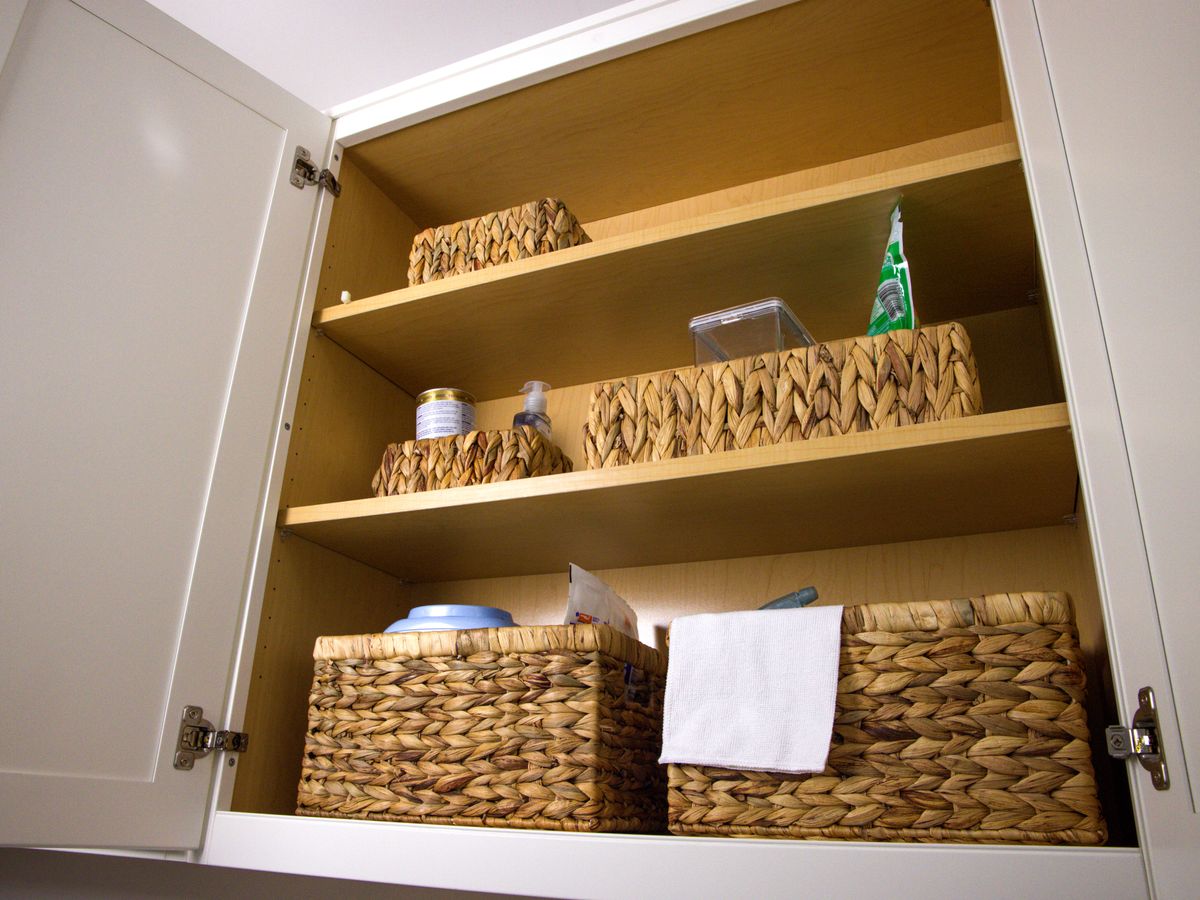
Maximize awkward gaps and corners
Small laundry zones are full of oddly shaped dead space. The slim gap beside the machine, the corner above the door, the underside of a shelf, each one can earn its keep once you organize laundry supplies to fill it.
Slide a narrow rolling cart into side gaps. Mount a small bar under a shelf and hang a spray bottle by its trigger. Add adhesive hooks inside the closet for a hand-wash mesh bag or a folding drying rack. If your whole laundry setup lives in a corner of another room, my walkthrough on setting up a laundry corner in a small apartment covers how to zone it cleanly.
Keep it tidy with a two-minute reset
Organization only lasts if it’s easy to maintain. The trick is a quick reset built into the chore you’re already doing, not a separate cleaning project.
Every time you move a load to the dryer, spend two minutes wiping the shelf, returning the measuring cup, and dropping stray socks into their bin. Because everything already has a designated spot, resetting is fast. Storing supplies well also frees up mental space to handle the clothes themselves; if drawers are your next battle, see how to fold clothes to save space.
A small-space starter kit under $60
You can transform a cramped laundry area for less than the cost of dinner out. You don’t need to buy everything at once, but here’s what actually earns its place if you’re starting from scratch.
- Over-the-door organizer ($10–$20): holds spray bottles, stain pens, clips, and lint rollers off your shelf.
- Two to three clear bins ($5–$8 each): one for dryer sheets, one for orphan socks, one for stain tools.
- Slim rolling cart ($20–$35): fits the gap beside the machine and rolls out when you need it.
- Adhesive hooks and a small wall shelf ($8–$15): for drying racks, mesh bags, and everyday detergent.
Add pieces as your budget allows. Even just the over-the-door organizer and two bins will change how the space feels. Renters especially benefit here, since none of these require permanent installation.
Group supplies by when you use them
The last piece of a genuinely easy system is arranging things by workflow, not by looks. Your most-used items should sit at eye level and within arm’s reach of the machine, while occasional supplies can go higher or further back.
Put detergent and dryer sheets front and center because you touch them every load. Keep stain tools in your grab-and-go basket one shelf down. Push bulk refills, seasonal items like a portable drying rack, and rarely used specialty cleaners to the top shelf or a separate closet. When you organize laundry supplies around how often you reach for each item, you stop shuffling things around every single wash.
Your next step
You don’t need a dedicated laundry room to have an organized one. Start this weekend by editing your supplies down to the essentials, then add one vertical solution, a shelf, an over-the-door organizer, or a slim rolling cart. Once you organize laundry supplies with a spot for every item, the whole chore gets faster, safer, and a lot less annoying, no matter how small your space is.

Felipe Amaral writes about laundry and clothing care for real life — small apartments, busy weeks and clothes you actually want to last. Based in Denver, Colorado, he’s made every laundry mistake in the book so you don’t have to.