
When I moved into a 400-square-foot studio, my full-size ironing board was the first thing that had to go. There was simply nowhere to stand it, let alone leave it up. For the first week I ironed shirts on a folded bath towel spread across the kitchen counter, and to my surprise, it worked beautifully.
If you are wrestling with the same problem, take heart. Small-space ironing is entirely doable in any apartment without a bulky board hogging your floor. With a few clever tools and a couple of technique tweaks, you can keep your clothes crisp in even the tiniest apartment.
Why a Full-Size Board Isn’t Your Only Option
The traditional ironing board is built for convenience, not for small homes. It demands storage space, floor space when open, and a permanent spot most studios cannot spare. The good news is that a board is really just a padded, heat-safe, flat surface, and there are many ways to recreate that in miniature.
Once you stop thinking you need the full setup, a world of compact alternatives opens up. The goal is simply a stable, heat-resistant surface at a comfortable height, and that can take many forms.
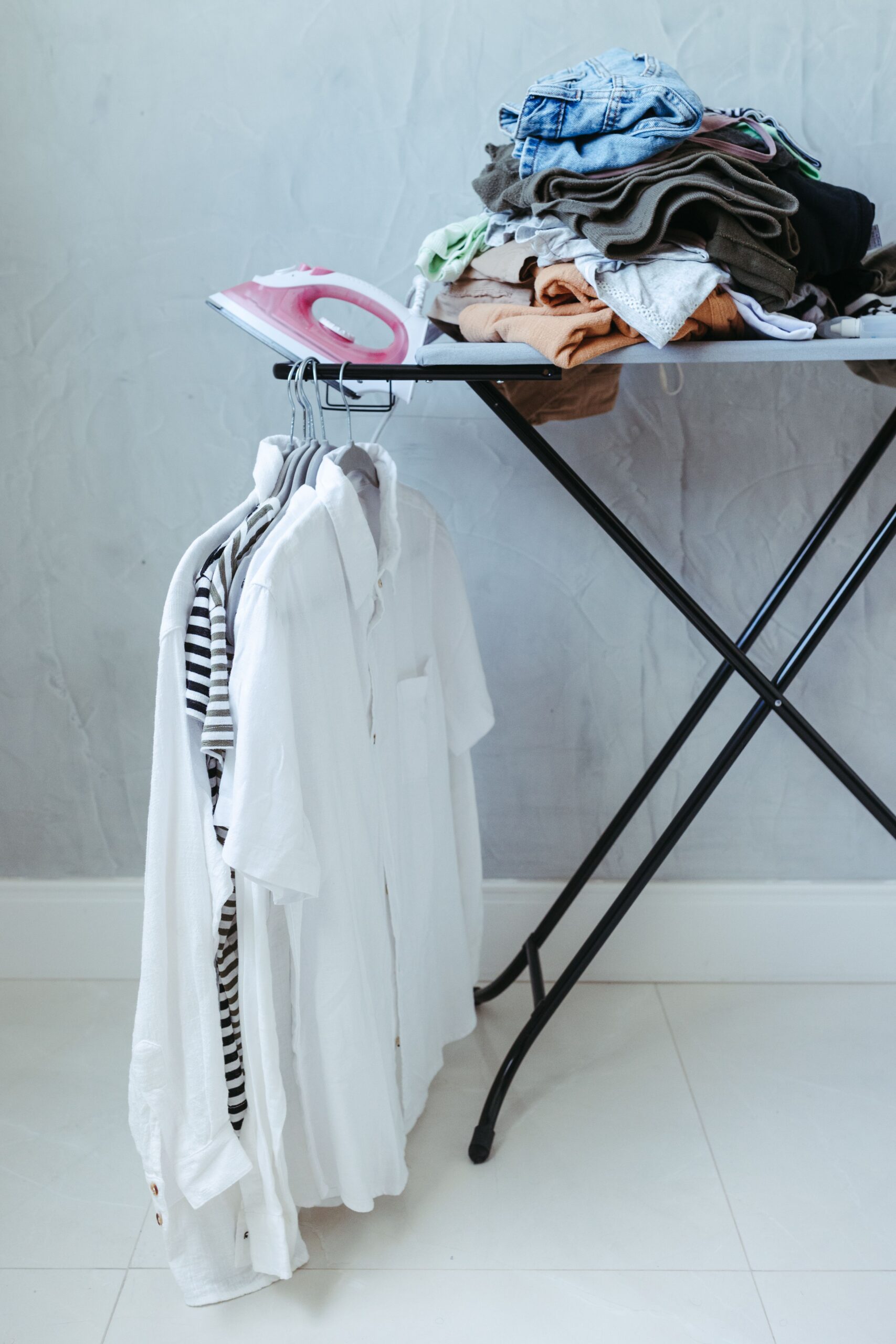
Small-Space Ironing Tools That Replace a Full Board
Several inexpensive products are designed specifically for people without room for a standard board. Any one of these can become your go-to solution:
- Tabletop ironing board: A small folding board that sits on a counter or table, then stores flat in a cupboard.
- Ironing blanket or mat: A heat-reflective pad you unroll on any sturdy surface and roll up afterward.
- Over-the-door board: Hangs on a door and folds up, using vertical space you already have.
- Handheld garment steamer: Skips the board entirely by smoothing clothes on the hanger.
My personal favorite is the ironing mat. It costs little, weighs almost nothing, and turns any table or counter into a pressing station in seconds. When you are done, it rolls up small enough to slide behind a drawer.
DIY Surfaces You Already Own
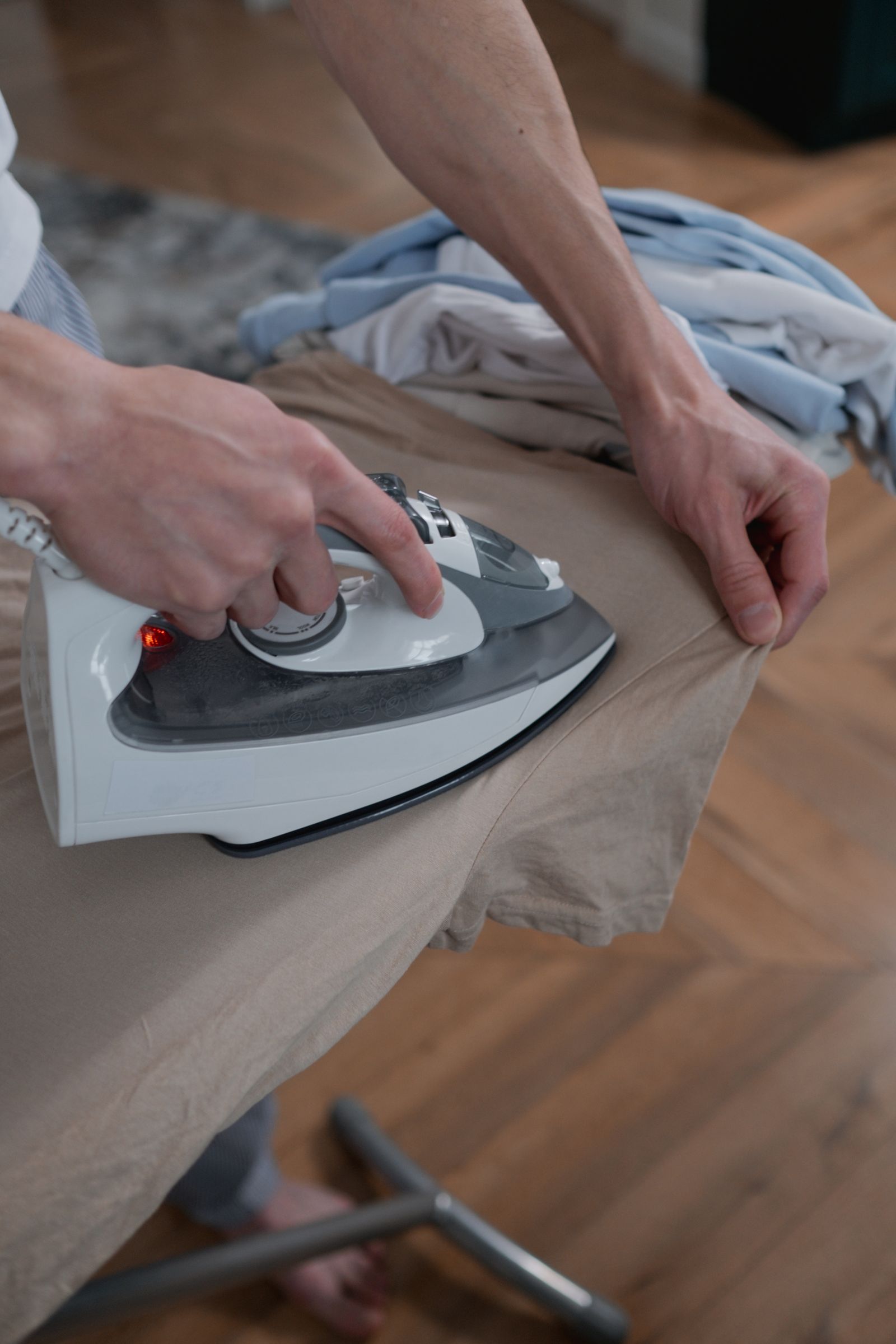
If you would rather not buy anything, your home already holds several safe ironing surfaces. A thick folded towel or a wool blanket on a countertop or a sturdy table provides plenty of padding and heat protection.
Just make sure the surface underneath can handle warmth; avoid ironing directly over anything plastic, laminate that may warp, or a delicate finish. Lay down two layers of towel for insulation, and you have a perfectly serviceable pressing area at no cost.
The Bed Method (With a Caveat)
In a pinch, a firm bed topped with a thick towel works for a quick press. Use it only for light touch-ups, keep the iron moving, and never leave a hot iron resting on the fabric. This is a backup, not a daily solution, since mattresses are not designed for heat.
Skip the Iron Entirely: Steaming and Hanging
Sometimes the best small-space solution is to avoid the iron altogether. A handheld steamer smooths most wrinkles while a garment hangs, taking up almost no storage and no surface at all. If you are weighing your options, our comparison of steamer vs iron breaks down which tool suits your wardrobe.
You can also let your bathroom do the work. Hang wrinkled clothes near a hot shower and the steam relaxes light creases in about ten minutes. Combine that with smart drying habits from our drying rack setups for small apartments and you will iron far less often.
Small-Space Ironing Technique Tips
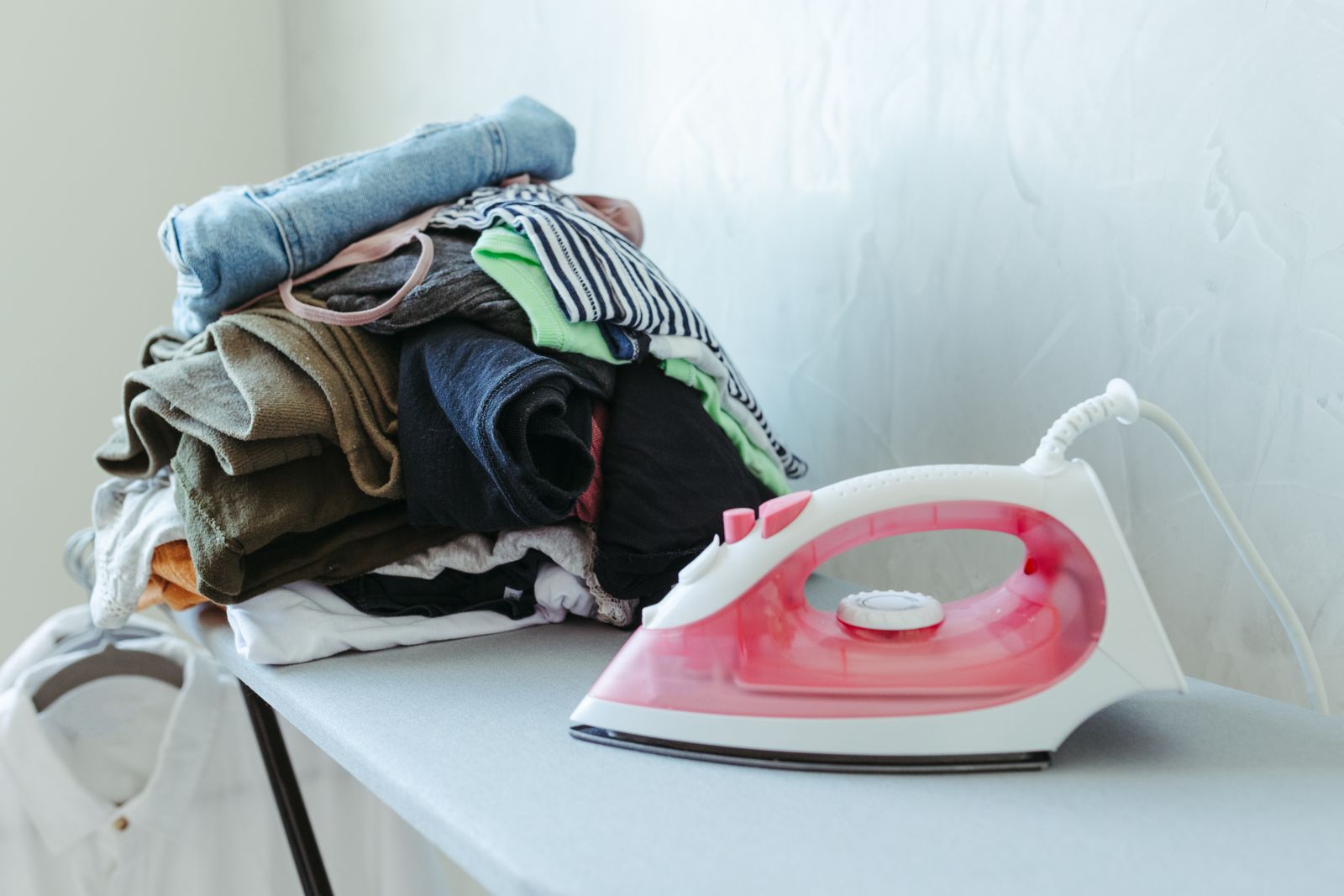
Small-space ironing without a full board takes a slightly different approach, but the results can be just as crisp. Work in small sections, since your surface is smaller, and reposition the garment often rather than trying to stretch it across a tiny pad.
For sharper results on a hanging shirt, our step-by-step guide on how to iron a dress shirt adapts easily to a compact setup. Keep the iron moving to avoid scorching, and use the tip of the iron to reach collars, cuffs, and plackets that need detail work.
Storing Your Compact Setup
The whole point of small-space ironing is keeping gear out of the way, so every small-space ironing tool should earn its storage spot. Store an ironing mat flat behind a dresser, hang a tabletop board on a closet hook, and tuck a steamer into a drawer or basket with your other supplies.
A little small-space ironing organization keeps everything accessible without cluttering your limited space. Our tips on how to organize a tiny laundry closet and set up a functional laundry corner show exactly how to carve out room for pressing tools even when square footage is scarce.
Living small does not mean living wrinkled, and small-space ironing proves it. Pick one small-space ironing method that fits your space, stock a compact tool or two, and you will keep your clothes looking sharp without ever missing that bulky old ironing board. Start this week by trying the towel-on-the-counter trick, and see how little you actually needed the full setup.
Choosing the Right Small-Space Ironing Solution
With so many board-free options, the best choice depends on what you wear and how often you press. A little honesty about your routine narrows it down quickly and saves you from buying gear you never use.
If You Rarely Iron
For someone who presses a shirt once or twice a week, an ironing mat and your existing iron are more than enough. There is no reason to invest in anything larger, and the mat stores flat in seconds.
If You Iron Often
If you press dress shirts most mornings, a wall-mounted fold-down board or an over-the-door model gives you a stable surface without permanent floor use. These cost a bit more but pay off in daily convenience and a crisper finish.
If You Hate Ironing
For the ironing-averse, lean on a steamer and steam-friendly fabrics. Knits, performance blends, and wrinkle-resistant cotton need little to no pressing, which is the ultimate small-space hack: owning clothes that barely wrinkle in the first place.
Fabric Habits That Reduce Ironing
The less you need to iron, the less space your gear demands. A few laundry habits dramatically cut down on wrinkles before they ever set in.
- Remove clothes from the dryer promptly while still warm, then hang or fold immediately.
- Hang shirts to dry on good hangers so gravity smooths them naturally.
- Do not overload the washer, since crammed loads come out deeply creased.
- Shake each item before hanging or laying it flat to release fresh wrinkles.
Master these habits and you may find you only need to touch up a collar or cuff here and there, which makes even the most compact ironing setup perfectly sufficient.
Frequently Asked Questions
Can I really iron on a towel instead of a board?
Yes, as long as the surface underneath is heat-safe and stable. A thick folded towel or wool blanket on a sturdy table or counter provides enough padding for most everyday pressing. Just avoid delicate finishes and plastic laminates that could warp.
Are tabletop ironing boards worth it?
For small spaces, absolutely. They give you a proper padded surface at a comfortable height, then fold flat to store in a cupboard or on a hook. They are one of the best value purchases for anyone tight on room.
Safety Notes for Ironing Without a Board
Small-space ironing is safe as long as you respect the heat. Always iron on a stable, level surface so the iron cannot slide or tip, and keep the cord clear of the edge where it could snag and pull the iron down. Set the iron upright on its heel whenever you pause, never flat on your improvised surface.
Match the temperature to the fabric to avoid scorching, and keep a small heat-safe rest, like a ceramic tile, nearby for setting the iron down between passes. If you use a towel or blanket, check periodically that it is not overheating, and never iron over anything with a plastic coating. A cautious setup means you get all the convenience of compact ironing with none of the risk.
With these precautions in place, even the smallest apartment can handle crisp, well-pressed clothes safely. The right surface and a steady hand matter far more than the size of your equipment. For broader guidance on safe, efficient garment care at home, the Department of Energy’s Energy Savings Hub are a helpful reference.

Felipe Amaral writes about laundry and clothing care for real life — small apartments, busy weeks and clothes you actually want to last. Based in Denver, Colorado, he’s made every laundry mistake in the book so you don’t have to.