
You unzip your gym bag two days after a workout and the smell hits you before you even see the clothes — that sharp, permanent funk baked into your favorite leggings and running shirt. You washed them, you swear you did, but the moment you start sweating again, the odor comes roaring back like it never left.
If that sounds familiar, you’re not doing anything wrong so much as treating activewear like ordinary laundry. Learning how to wash and care for activewear is a little different, because the same synthetic fibers that wick sweat and stretch with your body also trap bacteria and oils that regular washing leaves behind. Get the method right and the gym smell disappears for good.
Why activewear holds onto odor
Most performance clothing is made from polyester, nylon, spandex, or a blend of the three. These synthetic fibers are hydrophobic, meaning they repel water — which is great for moving sweat away from your skin, but terrible when it comes to washing that sweat back out.
Body oils and odor-causing bacteria cling to the surface of these fibers and to the tiny spaces in the knit. Cotton absorbs and releases them in the wash, but synthetics hold on. Add too much detergent or fabric softener into the mix and you actually seal that residue in, which is why over-washed gym clothes often smell worse, not better.
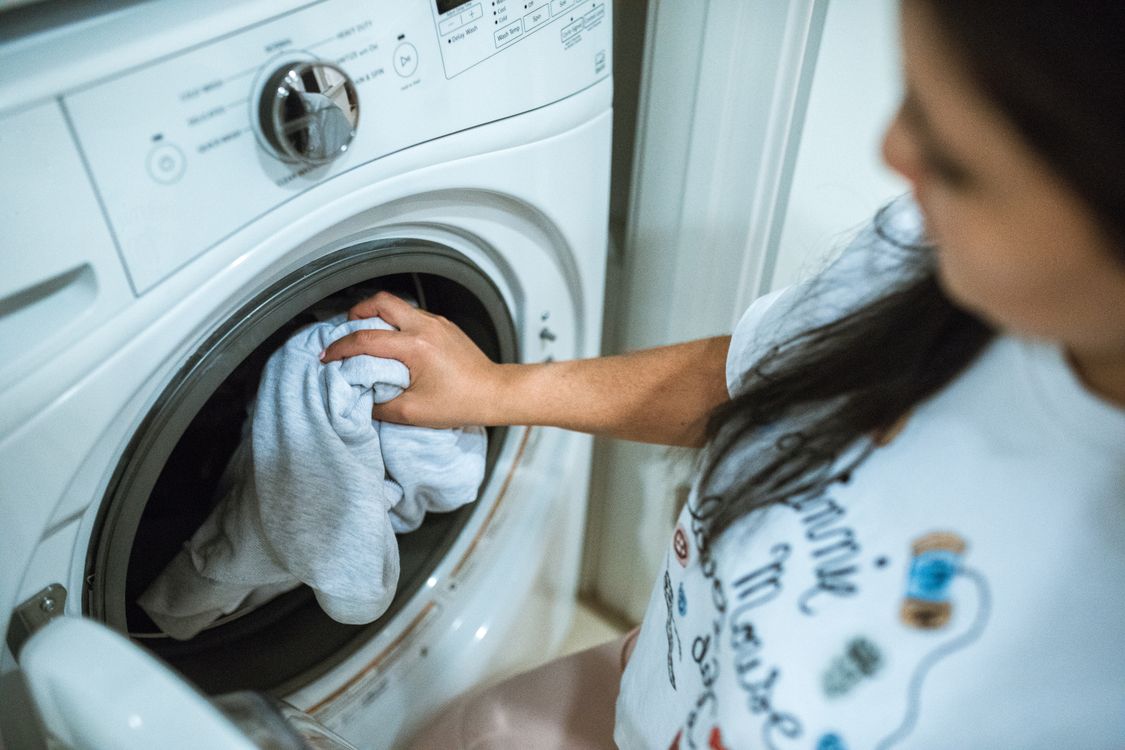
The right way to wash activewear
The goal is to strip away oils and bacteria without breaking down the stretch and wicking properties you paid for. That means cooler water, gentler agitation, and less product than you’d think.
- Wash in cold water (around 60–85°F). Hot water breaks down elastane and sets odor-causing oils.
- Turn everything inside out so the sweaty side faces the water and detergent directly.
- Use a small amount of regular detergent — about half what you’d use for a normal load.
- Skip fabric softener entirely. It coats fibers, traps bacteria, and ruins moisture-wicking.
- Choose a gentle or delicate cycle to protect elastic fibers and printed logos.
Using less detergent is not just about odor — it’s a good habit across your whole wardrobe. If you’re not sure what a correct dose looks like, this breakdown of how much detergent you actually need makes it easy to measure.
How to actually kill the gym smell
When odor is already locked in, a normal wash won’t cut it. You need to break down the bacteria and oils with a pre-soak before the regular cycle.
The vinegar pre-soak
Fill a basin with cold water and add one cup of white vinegar. Submerge your activewear and soak for 15–30 minutes, then wash as usual. Vinegar breaks down the bacterial buildup that regular detergent leaves behind. One firm safety rule: never combine vinegar with chlorine bleach, and never mix bleach with ammonia — those combinations create toxic gas.
Sports-specific and enzyme detergents
Enzyme-based or sport-formulated detergents ($8–$15) are designed to digest the proteins and oils in sweat. They’re worth it if you work out often. Look for the words “enzyme” or “activewear” on the label, and still use a modest amount.
Baking soda boost
For an extra deodorizing kick, add half a cup of baking soda to the wash along with your detergent. It neutralizes acidic odor and helps freshen the fibers without any coating or residue.
Drying activewear without wrecking it
Heat is the fastest way to destroy performance fabrics. The dryer’s high temperatures melt and weaken elastane, shrink synthetic blends, and can bake in any odor that survived the wash.
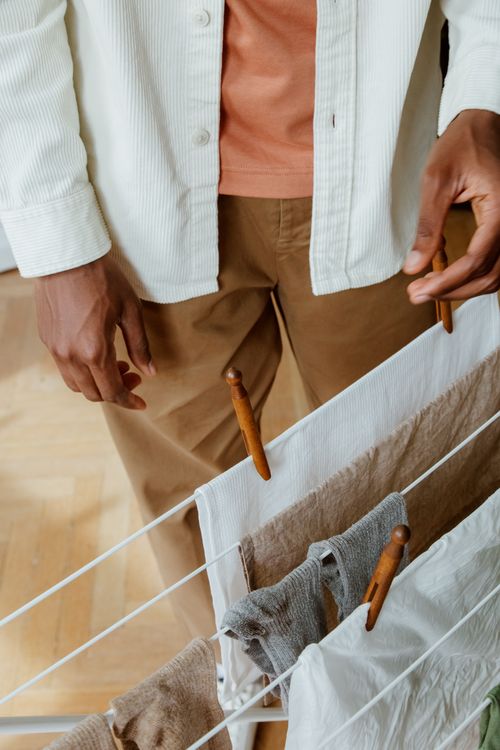
Air drying is almost always the right call. Hang or lay pieces flat somewhere with good airflow, and avoid direct sunlight for long periods, which can fade bright colors and degrade elastic over time. If you must use a machine, choose the no-heat or air-dry setting and pull items out slightly damp.
Drying quickly matters just as much as drying gently, because slow-drying synthetics can grow mildew and turn musty. If you dry indoors, the airflow tricks in this guide to how to dry clothes indoors without the musty smell apply perfectly to gym gear.
Habits that keep gym clothes fresh
Half the battle happens before laundry day. A few small routines stop odor from ever building up in the first place.
- Never leave sweaty clothes balled up in a bag or hamper — hang them to dry first, then wash.
- Wash activewear after every single wear, even light sessions.
- Don’t let a wet load sit in the washer; move it to dry immediately.
- Give a periodic vinegar soak to your most-used pieces as maintenance, not just as a rescue.
Treating your performance pieces this gently is the same mindset that keeps any garment looking new for years. The low-heat, wash-inside-out approach that protects your leggings is exactly what helps you keep black clothes from fading too.
How often should you replace activewear?
Even the best care routine won’t make performance fabric last forever, and knowing when a piece is past its prime saves you from fighting a losing battle against odor. Most quality activewear lasts one to three years of regular use, depending on how often you wear and wash it.
Watch for a few telltale signs. Leggings that have gone see-through when you bend, waistbands that no longer stay put, sports bras that have lost their support, and shirts that smell the instant you sweat are all signals the elastane and fibers have broken down. At that point the fabric structure itself is compromised, and washing can only do so much.
You can stretch that lifespan considerably by rotating your gear. Owning three or four sets instead of one means each piece gets more time to fully dry and rest between workouts, which reduces the constant moisture that wears fibers out and breeds odor. Rotation is one of the cheapest upgrades you can make to your workout wardrobe.
When something finally wears out, don’t just bin it. Many textile recycling programs accept worn synthetics, and old technical tops make excellent cleaning rags. Retiring a piece with grace is part of caring for activewear over the long run.
Special cases: sports bras, compression and waterproofs
Some pieces need a little extra thought. Sports bras and compression wear rely heavily on elastic, so always wash them on gentle, in cold water, and never tumble dry — heat is what turns a supportive bra into a loose one within months. A mesh laundry bag protects clasps and straps from snagging.
Waterproof and water-resistant layers, like running jackets, need their own care. Wash them alone, with no softener, and refresh the water-repellent coating occasionally with a wash-in treatment made for technical fabrics. For care questions on specific fibers, the EPA WaterSense laundry products is a reliable, unbiased reference.
Troubleshooting: when the smell still won’t go away
Occasionally you do everything right and a piece still smells faintly sour the moment you warm up. Before you toss it, work through a short checklist — the problem is usually fixable.
First, suspect your washing machine, not the clothes. Front-loaders in particular build up a film of detergent and bacteria in the door gasket and drum that transfers onto every load. Run an empty hot cycle with a machine cleaner or a couple of cups of white vinegar once a month, and leave the door open between washes so the drum dries out.
Second, look at how much detergent and softener you’ve been using historically. Years of buildup can saturate a fabric, and a single stripping soak — a long, hot-free soak in oxygen bleach and a scoop of baking soda — can reset heavily loaded pieces. Do this occasionally, not routinely, since it is more aggressive than a normal wash.
Finally, accept that performance fabrics have a lifespan. Once the fibers are broken down and permanently impregnated with odor after heavy use, no amount of washing fully restores them. When that day comes, recycle the old pieces and start fresh with better habits from day one.
Your next step
Tonight, gather your smelliest gym pieces, turn them inside out, and give them a 20-minute cold vinegar soak before a gentle cold wash with half your usual detergent. Hang them to dry and take a sniff in the morning. That one reset is usually all it takes to prove that caring for activewear the right way really can send the gym smell packing for good.

Felipe Amaral writes about laundry and clothing care for real life — small apartments, busy weeks and clothes you actually want to last. Based in Denver, Colorado, he’s made every laundry mistake in the book so you don’t have to.