
It’s Sunday afternoon, you’ve got a week’s worth of laundry in two overstuffed bags, and you’re standing in a fluorescent-lit laundromat trying to figure out which of the twelve machines actually works. The person next to you seems to have a system; you clearly do not. An hour later you’re still waiting on a single dryer while your quarters slowly disappear.
The laundromat doesn’t have to be a slow, expensive afternoon. With a little planning, you can walk in with everything you own and walk out ninety minutes later with clean, dry, folded laundry. This is the Laundromat 101 approach: wash everything in one efficient trip, without wasting money or standing around.
Prep at home before you leave
The single biggest time-saver happens before you ever get to the laundromat. Sorting and prepping at home means you can load multiple machines the moment you arrive instead of blocking a folding table while everyone waits.
- Sort into separate bags at home: whites, darks, and delicates or towels.
- Pre-treat any stains before you leave so they have time to work during transport.
- Empty every pocket and zip up zippers to protect the machines and your clothes.
- Count your loads so you know exactly how many washers you need to grab.
- Bring your own measured detergent in a small bottle rather than buying overpriced single-use packets.
Measuring detergent ahead of time also stops you from overpouring, which is the most common laundromat mistake. If you’re unsure how much to bring, this quick guide to how much detergent you actually need will keep you from wasting product and money.
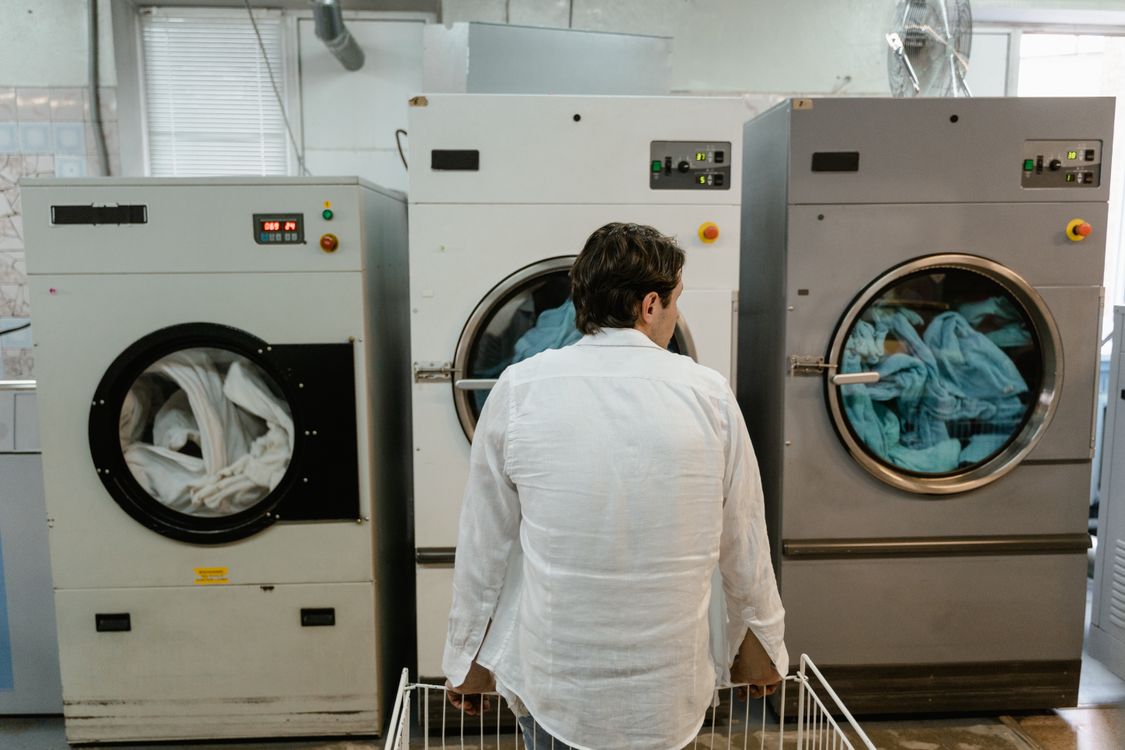
What to bring with you
A short, well-chosen kit turns a chaotic trip into a smooth one. Pack these items in a single tote so you never arrive missing something essential.
- Plenty of quarters or the laundromat’s payment card — expect $2–$4 per wash and $0.25 per 7–10 minutes of drying.
- Measured detergent, plus oxygen bleach or stain remover if needed.
- Mesh laundry bags for delicates and socks.
- A book, laptop, or headphones, since you’ll have short windows of downtime.
- Your own hangers and a folding surface plan for finishing quickly.
Use multiple machines at once
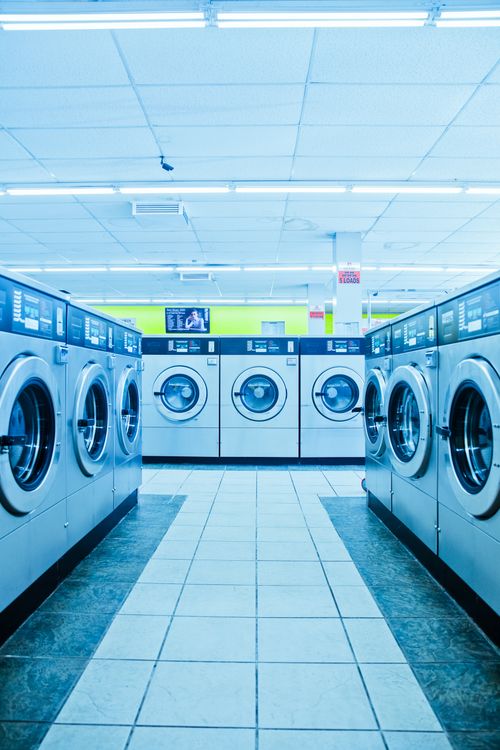
This is the real secret to the one-trip laundromat run. Instead of running loads one after another, run them side by side. If you have three loads, grab three washers and start them all within a couple of minutes of each other.
Running parallel loads turns three back-to-back 35-minute washes into one 35-minute block. The same logic applies to drying: multiple smaller dryer loads dry faster and more evenly than one giant packed drum. During busy hours, be considerate — claim only the machines you’re actively using, and unload promptly so others can take a turn.
Choose the right cycles and temperatures
Commercial machines are powerful, but the same fabric rules apply. Matching each load to the right settings keeps colors bright and prevents shrinking.
Washing temperatures
Wash whites and heavily soiled items in warm or hot water, colors in cold, and delicates on the gentle cycle in cold. Cold water is fine for most everyday loads, saves the environment, and protects colors from bleeding. One safety note: if you use chlorine bleach on whites, never combine it with vinegar or ammonia, as the mix releases toxic fumes.
Drying smart
Commercial dryers run hot, so pull cottons and synthetics a touch early to avoid shrinkage, and hang-dry anything delicate. Clean the lint screen before you start — a clogged screen from the last user can double your drying time and your cost. If you’d rather air-dry some pieces at home, packing them slightly damp works well with the right setup, like these drying rack setups for small apartments.
How to save money at the laundromat
Laundromat costs add up quickly, but small habits keep each trip cheap. A typical full trip runs $8–$15, and a few tweaks can shave a meaningful amount off that every single week.
- Wash full loads, not half loads — you pay per machine, so a packed washer costs the same as a light one.
- Bring your own detergent instead of buying vending-machine packets at a steep markup.
- Dry efficiently: clean the lint trap, don’t overfill the drum, and pull clothes early to finish air-drying at home.
- Use high-efficiency washers when available, since they spin out more water and cut your drying time and cost.
- Combine small loads that share a temperature and color group to reduce the number of machines you pay for.
The drying step is where most people quietly overspend. Because dryers charge by the minute, getting more water out in the wash is the cheapest way to lower your total. A quick extra spin cycle costs nothing and can save several dryer cycles’ worth of quarters. The ENERGY STAR program notes that efficient washers use far less water and energy, which is exactly why they cut drying costs too.
Laundromat etiquette and common mistakes
A shared laundry space runs on a few unwritten rules, and following them makes your trip smoother while keeping the peace with fellow washers.
Set a timer on your phone and return the moment a cycle ends, because leaving clothes sitting in a machine during a busy period is the fastest way to frustrate everyone waiting. If someone’s laundry has genuinely been finished for a while and every machine is taken, it’s acceptable to gently move it to a clean cart, but always handle others’ clothes with care.
The most common beginner mistakes are simple to avoid: overloading washers so nothing gets clean, forgetting to check pockets and staining a whole load with a stray pen or tissue, and mixing a new red shirt in with your whites. A minute of care at the sorting stage prevents the kind of disaster that no rewash fully fixes.
Time your trip to avoid the crowds
Nothing wrecks an efficient laundromat trip faster than a full house. When every machine is taken, your one-trip plan collapses into an afternoon of waiting.
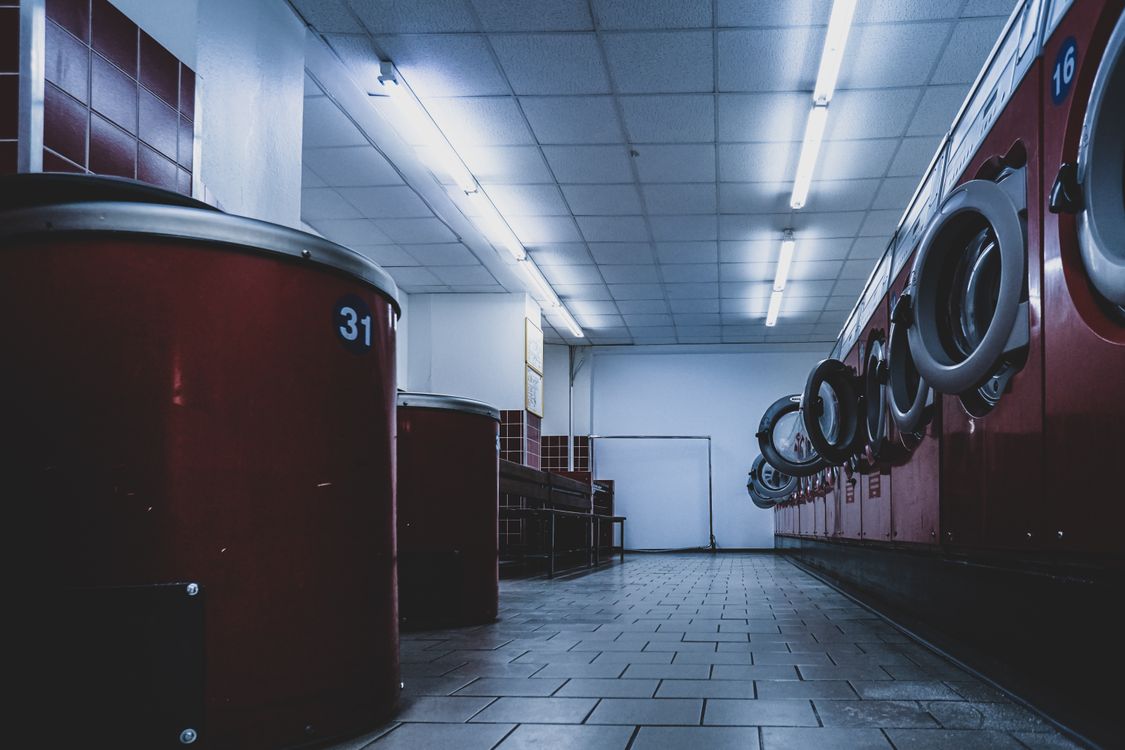
The busiest times are weekend mornings and weekday evenings after work. If your schedule allows, go on a weekday morning, early afternoon, or a weekend evening instead. Many laundromats are quietest right after they open, when the machines are also freshly cleaned. A quieter room means more machines, faster folding tables, and a calmer hour overall.
Fold before you leave
It’s tempting to stuff warm laundry into a bag and deal with it later, but that’s how you end up ironing everything the next day. Folding at the laundromat, straight out of the dryer, is the most efficient move you can make.
Warm clothes fold smoothly and resist wrinkles, and the laundromat’s big tables give you room most small apartments don’t have. Hang shirts on the hangers you brought, fold everything else immediately, and you’ll walk in the door at home with laundry that’s ready to put away — no second round of work required.
When you don’t have a laundromat nearby
Not everyone lives within easy reach of a laundromat, and sometimes a machine breaks at the worst possible moment. It helps to know you can keep clothes clean without one in a pinch.
Hand-washing essentials in a sink or tub, using a portable countertop washer, or spacing out small loads can bridge the gap between laundromat visits. For a full walkthrough of the options, see this realistic guide to doing laundry without a washing machine. Even if you rely on the laundromat, having a backup plan means a broken machine never leaves you stranded.
Your efficient laundromat routine
Put the pieces together and the whole trip becomes predictable. Sort and pre-treat at home, arrive during a quiet window with measured detergent and quarters, load several washers at once, dry in multiple drums, and fold everything warm before you leave.
Your next step: this week, pack a dedicated laundromat tote with detergent, quarters, mesh bags and a couple of hangers, and keep it ready by the door. Walking in prepared is the entire difference between a wasted afternoon and a single efficient trip — which is exactly what Laundromat 101 is all about.

Felipe Amaral writes about laundry and clothing care for real life — small apartments, busy weeks and clothes you actually want to last. Based in Denver, Colorado, he’s made every laundry mistake in the book so you don’t have to.