
It usually hits on a Wednesday: you open a drawer, find it empty, and realize the clean laundry is still sitting damp in the machine from three days ago. For busy people, laundry rarely fails because of effort. It fails because there’s no plan.
The fix isn’t doing more laundry, it’s doing it on purpose. A realistic laundry schedule built around one focused hour a week can keep a household in clean clothes without swallowing your evenings, even if you’re working long hours in a small apartment.
Why “do it when it piles up” always fails
A realistic laundry schedule fixes this, because the reactive approach feels efficient but quietly costs you the most. When you only wash once every basket overflows, you end up with giant loads, forgotten wet clothes, and that scramble to dry something the morning you need it.
Big irregular loads also clean worse, since an overstuffed drum can’t move clothes around. A predictable rhythm, even a small one, beats a heroic marathon session every time.

The one-hour-a-week laundry schedule
The core idea is simple: pick one day, do two or three loads back to back, and finish everything in a single session. Your active time stays around an hour; the machines do the waiting.
Here’s a realistic laundry schedule that works for most single people and couples:
- Load 1 (start of hour): everyday clothes, washed cold, then into the dryer or onto the rack.
- Load 2 (mid-session): towels and sheets, washed warm, while you fold Load 1.
- Load 3 (if needed): delicates or workout gear in a mesh bag on a gentle cycle.
- Last 15 minutes: fold, hang, and put everything away the same day.
The trick is overlapping the machine time with the folding time, so you’re never just standing around. By the time the last load finishes, most of the earlier laundry is already put away.
Build a realistic laundry schedule you keep
The single biggest predictor of success is treating your laundry hour as a fixed appointment, not a “someday” task. Put it on the calendar and defend it like you would a meeting.
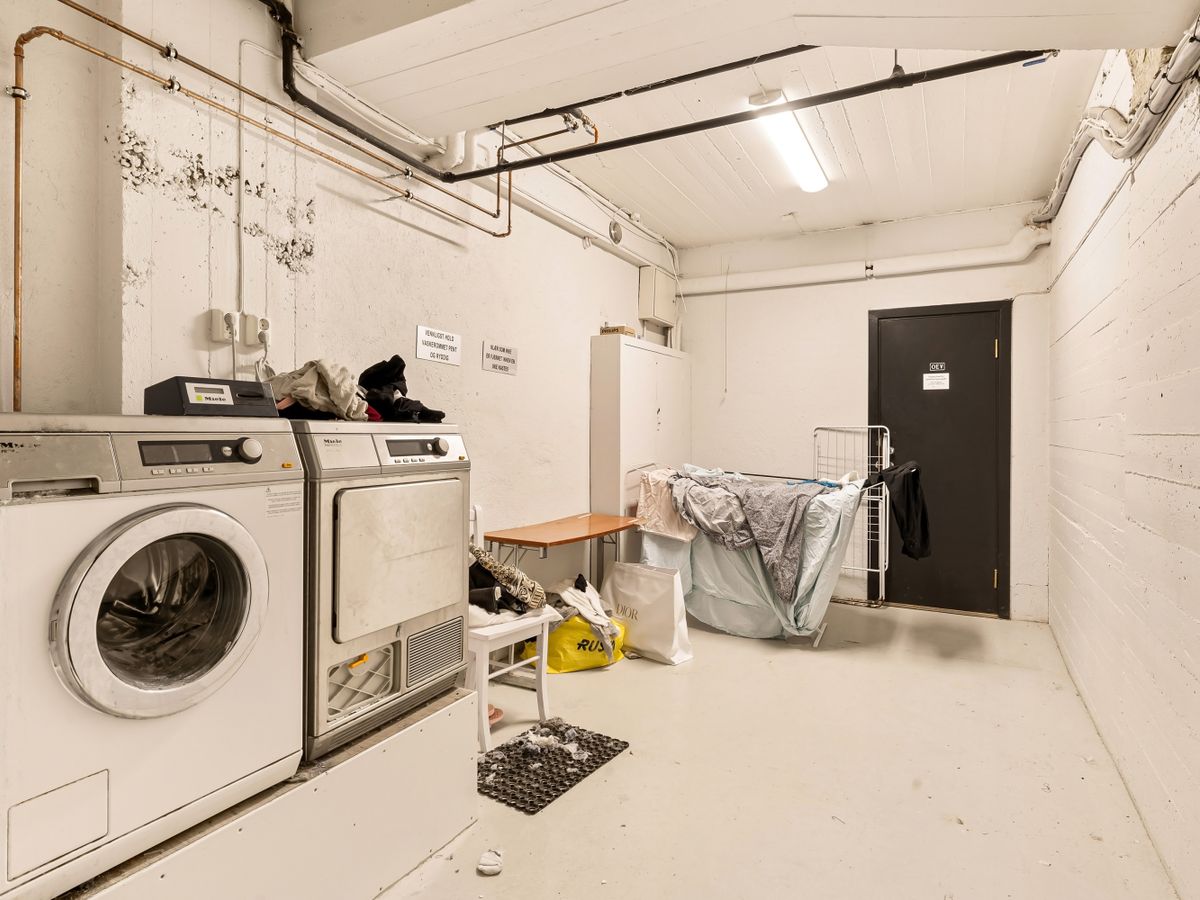
Sunday mornings and weeknight evenings tend to work best because you’re home long enough for two or three cycles. If you rely on a shared machine, an off-peak slot makes the whole thing faster and calmer.
No in-unit laundry? Adapt the plan
If you use a laundromat or a shared basement machine, batch even harder: bring everything at once and run multiple machines in parallel. Our guide to a single efficient laundromat trip shows how to compress the whole week into one visit.
For tiny apartments, a compact setup by a window or in a closet keeps the routine at home. See how to set up a laundry corner in a small apartment so your weekly hour never requires leaving the building.
Cut the friction that eats your time
Most of the time laundry “takes” is actually wasted on decisions and hunting for supplies. Removing that friction is how one hour stays one hour.
Keep a simple two-bin sorting system going all week so sorting is already done on wash day. Store your detergent, mesh bags, and stain treatment together in one spot, and pre-measure detergent so you’re not guessing mid-load.
On that note, using the correct amount matters more than people think. Overdosing leaves residue and forces extra rinses, and washing efficiently also saves energy, something the ENERGY STAR program highlights, so it helps to know how much detergent you actually need before you pour.
Handle the “I need it now” exceptions
A weekly schedule doesn’t mean you can never wash between sessions. It means the routine covers 90 percent of your needs so the exceptions stay rare and small.
For the occasional must-have item, a quick hand-wash in the sink and a hang-dry overnight is faster than running a whole cycle. Keeping a few extra basics on hand also buys you breathing room if life gets in the way of your laundry day.

Make the folding step painless
Even a realistic laundry schedule can stumble at folding, which is where most schedules collapse, because the clean pile gets dumped on a chair and lives there for a week. The rule that saves you: nothing goes back in the basket once it’s dry.
Fold or hang each load as it finishes, not all at the end. Breaking folding into small chunks between cycles turns the dreaded mountain into three quick five-minute tasks you barely notice.
Build your schedule around your actual week
There is no single perfect laundry day, only the one that fits your life. Before you lock it in, look honestly at your week and find the block where you are reliably home for two to three hours without needing to leave.
For people who work from home, a weekday morning can be ideal because you can start a load between tasks. For those with long commutes, a weekend slot usually wins. The goal is a time you will not have to constantly reschedule, because a schedule you keep beats a perfect one you skip.
If your household is bigger, you may need two shorter sessions instead of one. Splitting into a midweek load and a weekend load keeps any single day from turning into a four-hour ordeal.
The supplies that make a one-hour week possible
A smooth laundry hour depends on having the right basics ready before you start. Nothing derails the routine faster than discovering you are out of detergent halfway through.
Keep a running list and restock before you run out. The essentials are a good detergent, oxygen bleach for whites and stains, a couple of mesh bags for delicates, dryer balls, and a small stain pretreat. Buying these in bulk a few times a year saves money and last-minute store runs.
A quick pre-wash sorting habit
The five seconds you spend sorting a garment as you take it off saves minutes on laundry day. Toss lights in one bin and darks in another right from the start, and set anything stained aside so it gets treated before it dries and sets.
Common laundry schedule mistakes to avoid
Even a good plan can slip if you fall into a few predictable traps. The most common is starting a load right before bed and forgetting it, which means rewashing sour-smelling clothes the next day.
Another is treating drying as an afterthought. If you air dry, start early enough that clothes are ready before you need them. And resist the urge to skip a week; one missed session doubles the next one and quietly breaks the whole rhythm.
Adjusting the routine as life changes
Your laundry needs are not static. A new job, a roommate, a baby, or a move can all change how much you wash and when you have time to do it.
Revisit your schedule every few months and tweak it rather than abandoning it. Maybe the day shifts, maybe you add a load, maybe you drop one. The framework stays the same: a fixed slot, batched loads, and same-day folding.
How one hour a week adds up
It is worth appreciating what this small habit buys you over a year. Fifty-two focused hours replace the endless low-grade stress of an overflowing hamper, forgotten wet loads, and morning wardrobe panics.
That predictability is the real payoff. When laundry is handled on a schedule, it stops being a nagging background worry and becomes just another quiet, finished part of your week.
Conclusion: a plan beats willpower
Staying on top of laundry has almost nothing to do with discipline and everything to do with having a realistic laundry schedule you can actually repeat. One focused hour, one fixed day, and a low-friction setup will keep you in clean clothes for good.
Your next step: pick your laundry day right now and add it to your calendar as a recurring event. Next week, run the three-load hour once and see how much lighter the whole chore feels.

Felipe Amaral writes about laundry and clothing care for real life — small apartments, busy weeks and clothes you actually want to last. Based in Denver, Colorado, he’s made every laundry mistake in the book so you don’t have to.