
There’s a particular sadness in reaching for your favorite wool sweater in October, only to find it slumped in a drawer with the shoulders stretched into strange little horns and a permanent crease across the chest. It looked fine when you put it away in spring. Nine months of gravity and bad folding did the rest.
Knits are forgiving to wear but fussy to store. Learning to store sweaters so they keep their shape is less about fancy equipment and more about understanding why they deform in the first place, then removing those forces one by one. Here’s how I do it in a small Denver apartment with exactly one closet and no cedar chest in sight.
Why Sweaters Lose Their Shape in Storage
Almost every sweater tragedy traces back to one of three forces: gravity, moisture, and friction. Hang a heavy knit on a thin hanger and gravity drags the wet-heavy yarn downward until the shoulders bell out and the body grows two inches. It never fully recovers.
Moisture is sneakier. Wool and cotton both hold humidity, and a sweater put away even slightly damp becomes a buffet for mildew and a magnet for that musty basement smell. Friction from cramming knits into a tight drawer, meanwhile, breaks down fibers at the fold lines and speeds up pilling.
Fix those three things and a good sweater will outlast most of your other clothes. The single most important rule is the easiest: fold knits, never hang them.
Fold, Don’t Hang: The Golden Rule for Knits
Hanging is fine for structured, woven garments like button-down shirts and blazers, which have seams built to bear weight. Knitted fabric has no such skeleton. It’s essentially a grid of loops that will stretch in whatever direction you load it, which is why wool care guides recommend folding knitwear flat.
If you’re desperately short on drawer space and must hang a lightweight sweater, use the folded-over method: drape the sweater across the bar of the hanger at its waist, so the weight is shared instead of pulling from the shoulders. But for anything with real weight to it, folding wins every time.
How to Fold a Sweater So It Stays Crisp
A clean fold is the difference between a sweater that looks pressed in autumn and one that looks like it was wadded into a gym bag. Lay the sweater face-down on a flat surface and smooth out every wrinkle before you start.
- Fold both sleeves straight back so they cross the middle of the back in a shallow X.
- Fold in each side about a third of the way, creating clean vertical edges.
- Fold the bottom hem up to just below the collar, then fold once more so the sweater becomes a neat rectangle.
- Flip it over so the smooth front faces up and any small creases end up hidden underneath.
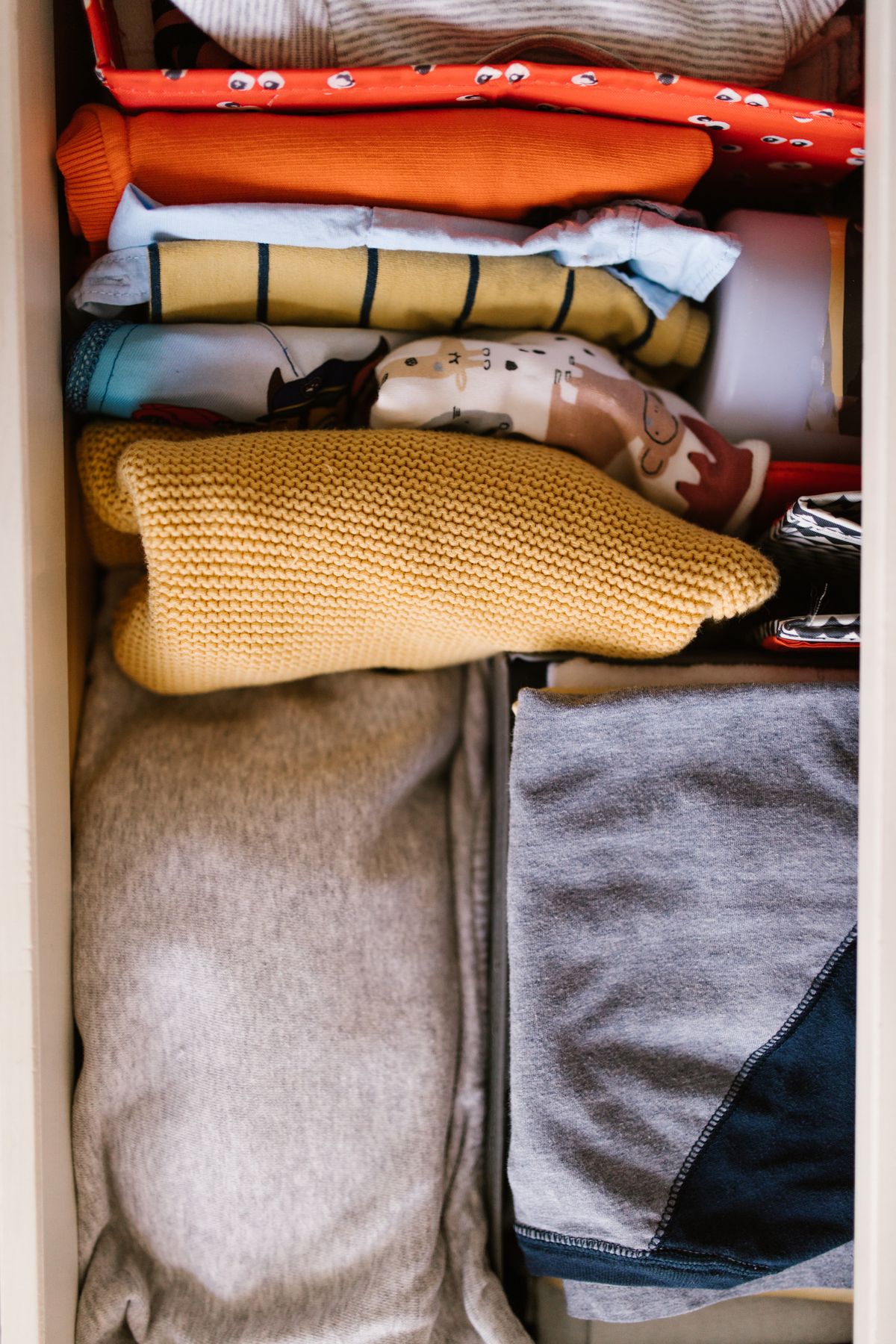
Store folded sweaters in stacks no taller than four or five, so the ones on the bottom aren’t crushed. If drawer space is tight, borrow a few tricks from how to fold clothes to save space. Heavier knits go on the bottom, delicate ones on top.
The Right Way to Fold Delicate and Chunky Knits
Cashmere and fine-gauge wool
Fine knits crease easily, so keep folds to a minimum and never store them under heavy items. A sheet of acid-free tissue paper laid inside the final fold prevents a hard crease from setting into the fibers over a long season. It also pays to wash wool sweaters without shrinking them before they ever reach the storage bin.
Chunky and cable knits
Bulky sweaters take up room and hold their shape well, so give them their own shelf rather than a crammed drawer. Rolling instead of folding works nicely for chunky knits and prevents a sharp fold line across a cable pattern.
Choosing the Right Storage Spot
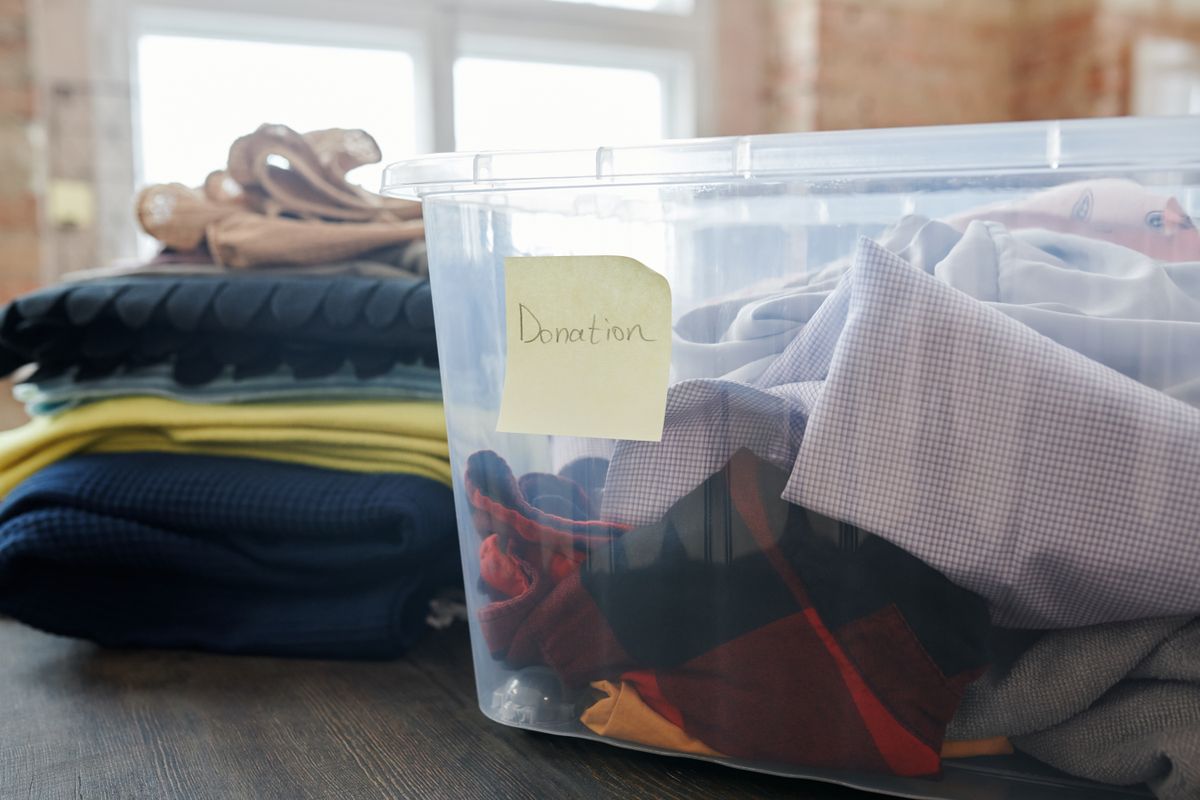
Sweaters want a cool, dry, dark place with a little airflow. A dresser drawer, a closet shelf, or an under-bed box all work. Avoid the top shelf directly under a hot attic ceiling, and avoid any spot prone to damp, like the floor of a bathroom-adjacent closet.
In a small apartment, under-bed storage is your best friend, and the same thinking applies when you store off-season clothes in a small apartment. Look for a flat, breathable fabric bin rather than a sealed plastic tub, since trapped humidity is what breeds that stale smell. Expect to pay around $15 to $30 for a good zippered under-bed bag with a structured lid.
Whatever the container, make sure it’s genuinely dry inside before clothes go in, and tuck in a small breathable moisture absorber if your climate runs humid.
Keeping Moths, Damp and Odors Away

Clothes moths are drawn to natural fibers, and above all to the traces of sweat and body oil left on a worn sweater. That’s why the number one moth defense is simple: always store sweaters clean. The EPA Safer Choice makes the same point about storing any natural-fiber garment. Wash or air them out before they go away for the season.
Cedar blocks and lavender sachets help repel moths naturally and smell far better than mothballs. Refresh cedar by lightly sanding it once a year to reopen the aromatic oils. If you do use any chlorine bleach to whiten a cotton knit before storage, never mix it with ammonia or vinegar, as the combination releases toxic fumes.
A Simple Seasonal Storage Routine
When the weather turns, give each sweater a quick once-over: clean it, check for any small holes to mend, and let it air for a few hours. Fold it properly, layer in tissue for the delicate pieces, and stack loosely in a breathable bin somewhere cool and dark.
Come the first cold snap, your sweaters will look exactly as they did the day you put them away, no stretched shoulders and no mystery creases. The next practical step: pull one sweater out of your closet today and refold it the proper way, so you can feel the difference before you commit a whole season’s worth.

Felipe Amaral writes about laundry and clothing care for real life — small apartments, busy weeks and clothes you actually want to last. Based in Denver, Colorado, he’s made every laundry mistake in the book so you don’t have to.